Application & Compatibility
This window deflector set fits the Toyota Starlet across five generations of production, spanning 1973 through 1999, plus the revived nameplate sold from 2020 onward. The Starlet evolved from a rear-wheel-drive subcompact coupe into a front-wheel-drive hatchback, with each generation carrying distinct door frame dimensions.
Generation Timeline
Generation | Chassis | Years | Drive | Body Styles |
1st Gen | P40 / P50 | 1973-1978 | RWD | 2-door coupe, 4-door sedan |
2nd Gen | P60 | 1978-1984 | RWD | 3-door hatch, 5-door hatch, 5-door wagon |
3rd Gen | P70 | 1984-1989 | FWD | 3-door hatch, 5-door hatch |
4th Gen | P80 | 1989-1996 | FWD | 3-door hatch, 5-door hatch |
5th Gen | P90 | 1996-1999 | FWD | 3-door hatch, 5-door hatch, Glanza V |
Nameplate Variants
Toyota Publica Starlet: JDM name for the 1st generation (P40/P50), marketed as the upscale version of the Toyota Publica
Daihatsu Consorte: Daihatsu-badged version of the 1st-generation Publica/Starlet platform, sharing P40 underpinnings and door frame geometry
Toyota Glanza: Originally the performance trim of the 5th-gen P90 Starlet (Glanza V, 1996-1999). The nameplate was revived in 2019 as a rebadged Suzuki Baleno sold in India, and again in 2020 as the Toyota Starlet in African markets
Production Gap Advisory
The "1973-Present" label reflects the nameplate's full span, but no Starlet-badged vehicle was produced between 1999 and 2019. The original Starlet was replaced by the Toyota Vitz (Echo/Yaris) in 1999. The 2020+ Starlet is a Suzuki Baleno rebadge with completely different door frame dimensions. Buyers sourcing visors for the revived model should reference Suzuki Baleno fitment data, not legacy Starlet generations.
Toyota Sera: Shared the P80 chassis and mechanicals with the 4th-gen Starlet but featured a unique 2-door coupe body with butterfly doors. Door frame contours are NOT interchangeable. Do not fit Starlet P80 visors to a Sera
RWD vs FWD transition: P40-P60 (RWD) and P70-P90 (FWD) have completely different door frame stamping. Visors are not cross-compatible between these two platform families
Hatchback vs Wagon: P60 wagon body uses longer rear doors than the 3-door/5-door hatchback. Visor sets are body-style specific
Toyota Yaris / Vitz: The Starlet's successor shares no door frame components despite overlapping market positioning
Aftermarket Supply Note
The original Toyota Starlet was discontinued in July 1999 after 26 years of continuous production. The existing global vehicle parc relies entirely on aftermarket parts supply. Starlet door visors are manufactured to order based on original door frame scans, ensuring fitment accuracy for legacy vehicles that may have accumulated decades of door seal wear. AutoBridge supplies these visors to Southeast Asian, Middle Eastern, and African markets where the Starlet maintained strong sales throughout the 1980s and 1990s.
Product Overview
AutoBridge Toyota Starlet window deflectors are manufactured using injection molding and plastic uptake processes, tailored to the specific door frame contours of each Starlet generation. The visors provide rain protection, ventilation, and wind noise reduction while maintaining OEM appearance quality.
Key Features
Generation-specific door frame scanning ensures precise fitment across P40 through P90 chassis
Available in three material grades: PC (polycarbonate) for maximum flexibility and impact resistance, acrylic (PMMA) for optical clarity, and PS (polystyrene) for cost-effective rigidity
Four installation methods accommodate varying buyer preferences: clip-on, tape-on, in-channel, and out-channel
Chrome and steel trim options allow visual customization to match vehicle age and market preferences
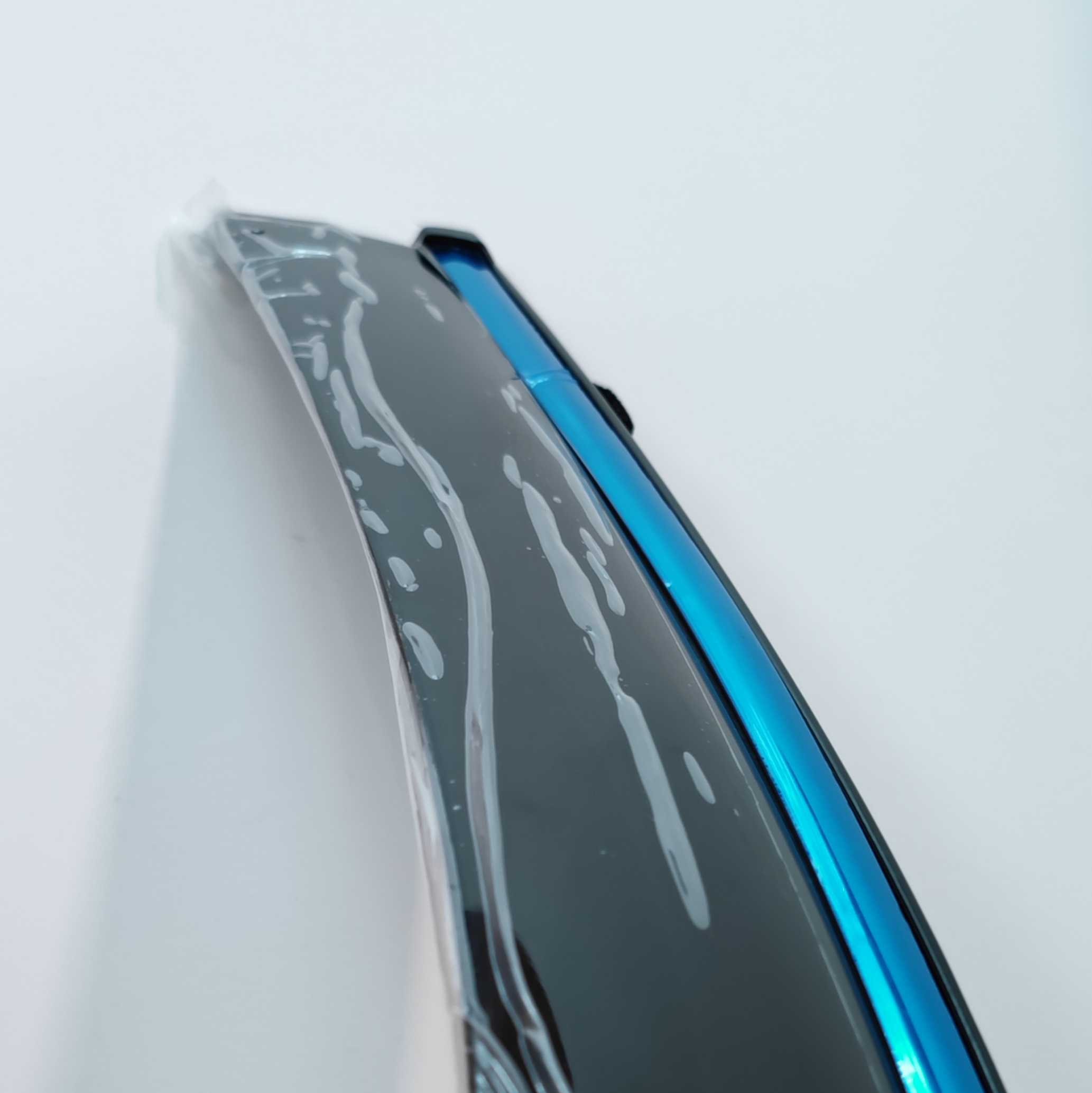
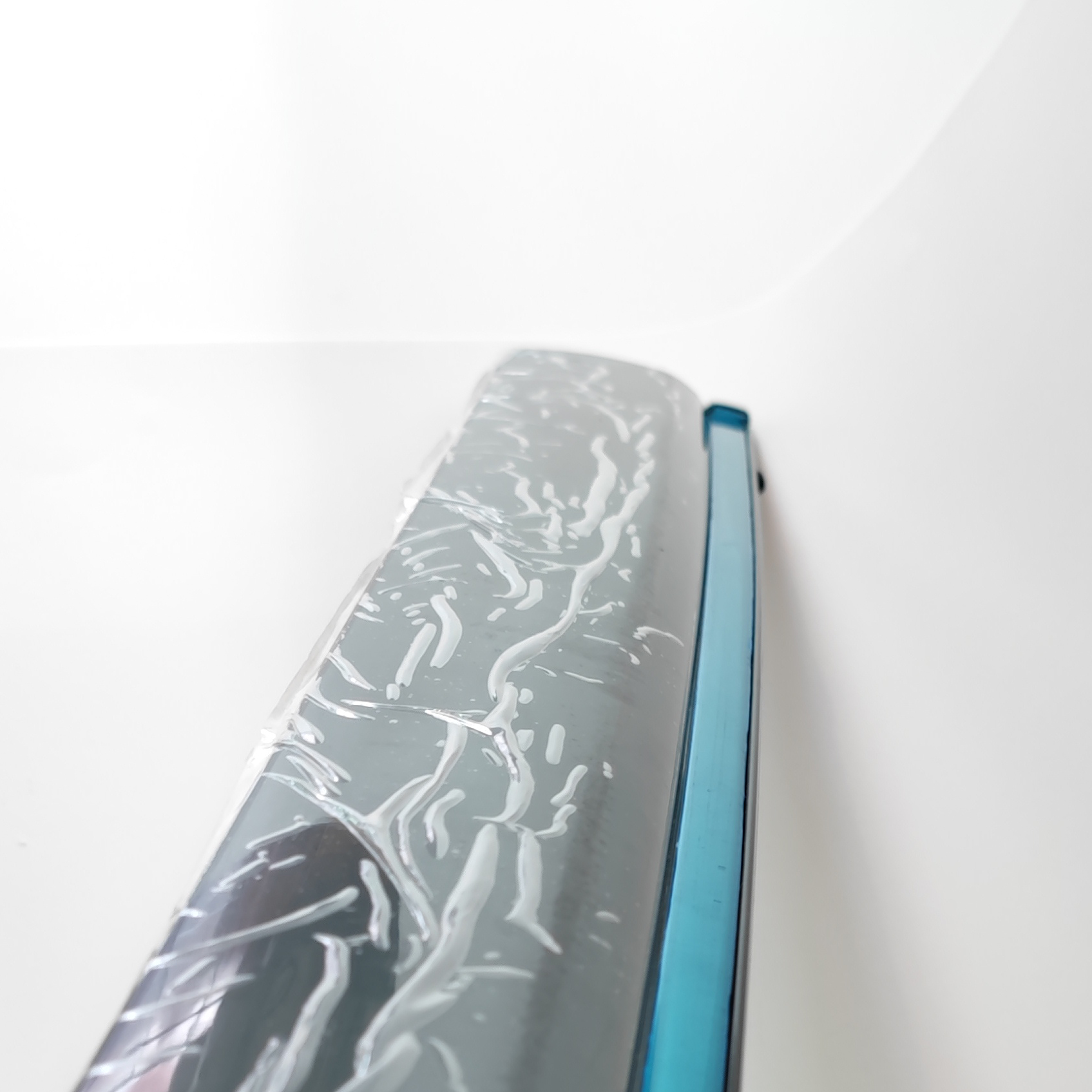
Protective film covers on chrome/steel trims are available in transparent or blue, with custom color options for bulk orders
Visor widening is determined by the specific car model to balance wind deflection effectiveness with door clearance
Manufacturing Process
Process | Machinable Thickness | Cost | Best For |
Injection Molding | 2.0mm - 2.5mm | Higher mold cost | Large-volume orders requiring precision accuracy |
Plastic Uptake | 1.2mm - 1.8mm | Lower mold cost | Smaller batches and budget-sensitive orders |
Injection molding achieves superior machining accuracy compared to plastic uptake, producing visors with consistent wall thickness and surface finish. Plastic uptake offers a lower mold opening cost, making it practical for buyers testing new markets or ordering in smaller quantities.
Fitment & Compatibility
The Toyota Starlet was produced across five generations with significant platform transitions. Door visor fitment is generation-specific and body-style-specific. Use the table below to confirm compatibility before ordering.
Fitment Matrix
Fitment Entry | Generation | Chassis | Body Style | Drive | Compatible |
1973-1978 1st-Gen Starlet | 1st | P40/P50 | 2-door coupe, 4-door sedan | RWD | Yes |
1978-1984 2nd-Gen Starlet 3-door | 2nd | P60 | 3-door hatchback | RWD | Yes |
1978-1984 2nd-Gen Starlet 5-door | 2nd | P60 | 5-door hatchback | RWD | Yes |
1978-1984 2nd-Gen Starlet wagon | 2nd | P60 | 5-door wagon | RWD | Yes (wagon-specific set) |
1984-1989 3rd-Gen Starlet 3-door | 3rd | P70 | 3-door hatchback | FWD | Yes |
1984-1989 3rd-Gen Starlet 5-door | 3rd | P70 | 5-door hatchback | FWD | Yes |
1989-1996 4th-Gen Starlet 3-door | 4th | P80 | 3-door hatchback | FWD | Yes |
1989-1996 4th-Gen Starlet 5-door | 4th | P80 | 5-door hatchback | FWD | Yes |
1990 Starlet GT (P80) | 4th | P80 (EP82) | 3-door hatchback | FWD | Yes (GT-specific trim) |
1996-1999 5th-Gen Starlet 3-door | 5th | P90 | 3-door hatchback | FWD | Yes |
1996-1999 5th-Gen Starlet 5-door | 5th | P90 | 5-door hatchback | FWD | Yes |
1996-1999 5th-Gen Starlet Glanza | 5th | P90 (EP91) | 3-door hatchback | FWD | Yes (Glanza V turbo-specific) |
2000-Present OEM Glanza (Suzuki Baleno) | Revival | Heartect | 5-door hatchback | FWD | Separate product (see note) |
Cross-Generation Compatibility
From | To | Compatible? | Reason |
P40/P50 (RWD) | P60 (RWD) | No | Different door frame stamping despite shared RWD layout |
P60 (RWD) | P70 (FWD) | No | Platform transition from RWD to FWD changed entire body architecture |
P70 | P80 | No | Different door frame contours, no shared panels |
P80 3-door | P80 5-door | No | Front doors differ in length between 3-door and 5-door variants |
P80 Starlet | P80 Sera | No | Sera has unique 2-door coupe body with butterfly doors, no shared door panels |
P90 Glanza V | P90 standard | Yes | Same body shell, different trim. Visors are interchangeable within P90 |
P90 Starlet (original) | 2020+ Starlet (Baleno rebadge) | No | Completely different vehicle. Revived nameplate shares nothing with original Starlet |
Model Year vs Production Year
Starlet production years and model years may differ by up to one year depending on market. For example, the 3rd-gen P70 entered production in late 1984 but was marketed as a 1985 model in some export markets. When ordering, confirm the production year from the vehicle identification number (VIN) rather than relying solely on registration documents.
Revived Nameplate Advisory (2020+)
The "2000-Present OEM Glanza (Suzuki Baleno)" fitment entry refers to the revived Toyota Starlet nameplate, which is a rebadged Suzuki Baleno produced in India. This vehicle shares no components with the original Starlet (1973-1999). Door visors for the revived model are listed under a separate Suzuki Baleno product line. Buyers should not assume compatibility between legacy Starlet visors and the revived nameplate.
Chrome Trim Design & OEM Options
Material Options
Material | Flexibility | Clarity | Cost | Recommended For |
PC (Polycarbonate) | High (bendable by hand) | Transparent | Premium | Markets requiring impact resistance, 3D stainless steel trim pairing |
Acrylic (PMMA) | Medium | High optical clarity | Mid-range | Buyers prioritizing visual transparency and surface gloss |
PS (Polystyrene) | Low (rigid) | Translucent | Economical | Cost-sensitive orders, electroplated bright trim pairing |
Design Styles
Style | Description | Common Material Pairing |
Original | Clean visor body without additional trim | All materials |
Mugen | Sport-oriented design with aggressive contouring | PC, Acrylic |
Chrome Lining/Trim | Electroplated or stainless steel accent strip | PC (3D stainless), PS (electroplated) |
Steel Lining/Trim | Brushed or mirror steel accent strip | PC, Acrylic |
Color Styles
Black: Solid opaque black, standard for OEM replacement markets
Translucent: Semi-transparent, allows partial window visibility
Smoke: Tinted dark finish, popular in Southeast Asian and Middle Eastern markets
2-Tone: Dual-color combination for customized appearance
Installation Methods
Method | Description | Reversibility | Best For |
Clip on | Spring clips grip door frame edge | High (removable) | Rental fleets, temporary use |
Tape on | Automotive-grade double-sided adhesive | Medium (adhesive residue) | Permanent installation without drilling |
In Channel | Inserts into window channel | Medium | Flush OEM look, requires channel clearance check |
Out Channel | Mounts on exterior door frame surface | High | Vehicles with tight window channels |
Chrome Trim Design Details
Electroplated Bright Strip Design
Electroplated bright trims are processed with chrome plating technology on high-quality plastic blanks. The chrome-plated bright trim presents a more shiny metallic luster under high light compared to 3D stainless steel decorative strips. When touched by hand, the curvature is more three-dimensional and rounder. To improve weather resistance, anti-oxidation surface treatment can be applied. Electroplated bright trims are usually matched with PS materials.
Mirror Stainless Steel Design
The mirror stainless steel design creates a nearly embedded installation for the chrome trim, smoothly installed in the groove of the door visor. The chrome trim fits smoothly into the groove, providing a smooth feel. This design reflects light with a single reflection angle, making it look like a flat mirror. The large curvature of the visor body complements the smooth decorative design, creating an obvious turning point relationship and enhancing overall aesthetic appeal.
3D Stainless Steel Design
The 3D stainless steel trim is more three-dimensional and rounded than the mirror stainless steel shape. The top and bottom sides and the protruding vertex in the middle form a curved design. When touched, you can intuitively feel the change in curvature. This curved shape produces varying reflection effects under high light at different angles. 3D stainless steel chrome trims are commonly used with PC material door visors, allowing the visor to be bent to a large extent.
Protective Film
The color of the protective film covers on chrome/steel trim is transparent or blue. Custom colors can be built by buyer for bulk orders.