Ford Transit
100 sets
FOB, CIF
T/T, L/C, Credit Card, Western Union
USD, EUR, HKD
Ford Tourneo, JMC Teshun
1986-2003, 2000-2014, 2013-Present
Door Visors
vent visors, side window wind deflectors, rain guards
| Fitment: | |||||||||
|---|---|---|---|---|---|---|---|---|---|
| Body Style: | |||||||||
| SKU: | |||||||||
| Availability: | |||||||||
| Quantity: | |||||||||
| |||||||||
Table of Contents
The Ford Transit is a fullsize light commercial van produced by Ford since 1965. Now in its fourth generation (2013-present, chassis code FK/FM), the Transit is sold as a cargo van, crew van, passenger van (9-seat), pickup, and chassis cab across Europe, the Middle East, Africa, Asia, Australia, and the Americas. The Transit platform also underpins the Ford Tourneo passenger MPV and the JMC Teshun (China market rebadge). AutoBridge supplies door visors (also called vent visors, side window wind deflectors, rain guards, or window deflectors) precision-engineered to the Transit's specific window channel and door frame geometry.
This product page consolidates fitment for the 1986-present Ford Transit across all three generations listed in the Fitment chips above. The 2nd-Gen (1986-2003), 3rd-Gen (2000-2014), and 4th-Gen (2013-present) Transits have different door frame geometries, so select your specific model year range from the Fitment chips before ordering.
1986-2003 Transit (2nd-Gen) – Cargo van, crew van, passenger, pickup
2000-2014 Transit (3rd-Gen) – Cargo van, crew van, passenger, chassis cab
2013-Present Transit (4th-Gen, FK/FM) – Cargo van, crew van, passenger (9-seat), pickup, chassis cab
Ford Tourneo – Passenger MPV variant (shares door frame geometry with Transit passenger models)
JMC Teshun – JMC-manufactured rebadge (China market, shares door visor specifications with 2nd-Gen Transit platform)
The Ford Transit is widely used across the UK, Germany, France, Spain, Turkey, the UAE, Saudi Arabia, South Africa, and Australia as a commercial workhorse. In European and UK markets, drivers often want side window ventilation during delivery stops or motorway driving without exposing the cab to frequent rain. In the Middle East and North Africa, door visors help deflect dust and hot air while allowing slight window cracking for ventilation. For camper van conversions (a growing segment in Europe and Australia), door visors enable nighttime ventilation without condensation risk.
Before installing, confirm your Transit's production year and body style match the Fitment chip selected above. The 2nd-Gen, 3rd-Gen, and 4th-Gen Transits have different front-door window channel widths. The rear-door geometry also differs between cargo van, crew van, and passenger configurations.
In-Channel: Slides into the upper window channel, no adhesive, reversible. Recommended for leased Transits or fleet operators who rotate vans every 3 years.
Tape-On (3M VHB): Adheres to the exterior door frame. Strongest hold, suited for commercial fleet use where vans are driven in high-speed motorway conditions.
Clip-On: Clips between the window glass and the door frame rubber. Common for cargo van variants with vertical window tracks.
For fleet operators managing 10-500 Transit vans, we recommend ordering the same mounting method across the entire fleet for simplified inventory and installer training. Tape-on mounting with 3M VHB adhesive is the most common choice for commercial fleets in the UK, Europe, and the Middle East, as it provides permanent hold through high-mileage use and regular commercial wash cycles.
For Middle East (UAE, Saudi Arabia, Qatar) and North Africa (Morocco, Algeria, Tunisia) buyers: After tape-on install, avoid commercial wash tunnels and heavy rain for 24 hours to allow 3M VHB adhesive to fully cure. High ambient temperatures accelerate cure time but also increase thermal stress on adhesive — pre-cool the door frame in shade before application.

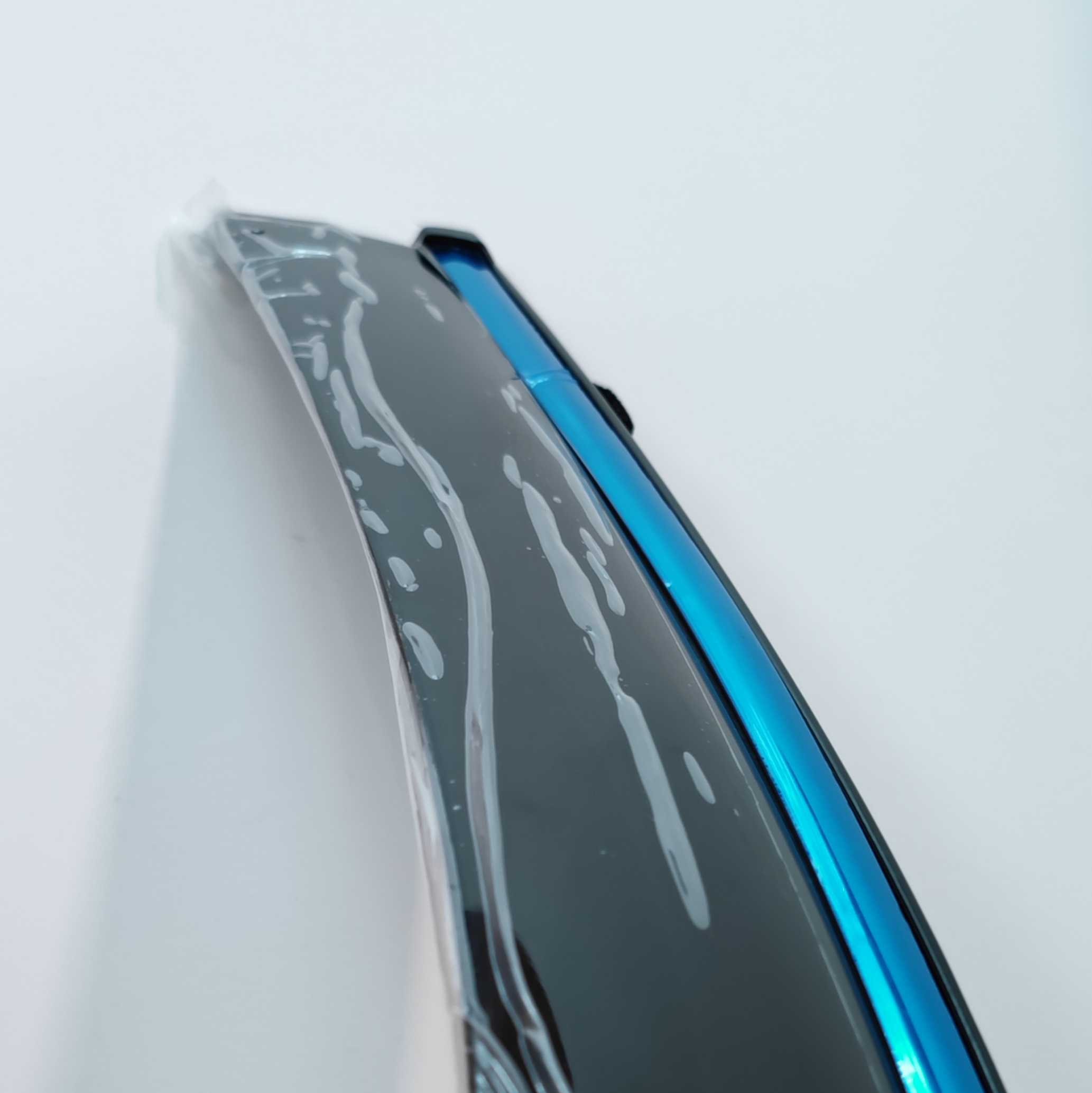
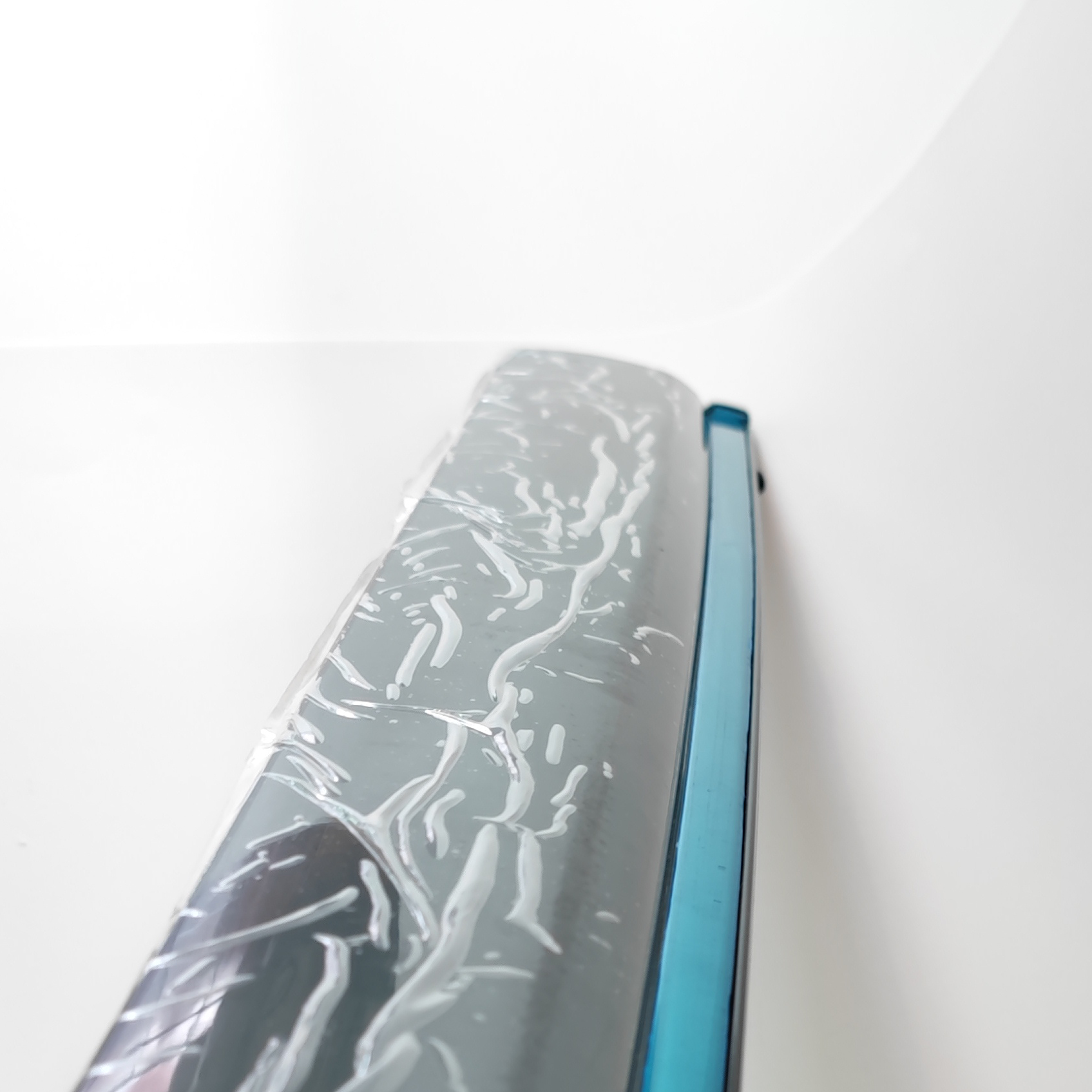
| Electroplated Bright Strip Shape Design Electroplated bright trims are processed with chrome plating technology on high-quality plastic blanks. The processed chrome-plated bright trim can present a more shiny metallic luster under high light compared to 3D stainless steel decorative strips. When touched by hand, the curvature of the electroplated bright trim is more three-dimensional and rounder than that of the 3D stainless steel chrome trim. To improve weather resistance characteristics, anti-oxidation surface treatment can be applied to electroplated bright trims. Electroplated bright trim s are usually matched with PS materials. |
![]() Mirror stainless steel design with PS material main body | Mirror Stainless Steel Design The design of mirror stainless steel creates a nearly embedded installation for the chrome trim, which is smoothly installed in the groove of the door visor. The chrome trim fits smoothly into the groove of the door visor, providing a smooth feel when touched by hand. This smooth design reflects light differently from 3D stainless steel designs, with a single reflection angle that makes it look more like a flat mirror when reflecting objects. The large curvature of the door visor main body complements the smooth decorative design, creating an obvious turning point relationship and enhancing its overall aesthetic appeal. |
![]() 3D stainless steel design with PC material main body
The PC material of the door visor can be bent to a large extent | 3D Stainless Steel Design The shape of the 3D stainless steel trim is more three-dimensional and rounded than the mirror stainless steel shape. The top and bottom sides of the chrome trim and the protruding vertex in the middle form a curved design. When touched by hand, you can intuitively feel the change in curvature. This curved shape produces varying reflection effects under high light at different angles. The main body of the door visor itself already has a certain curve design, and when they are paired together, they show a more traditional design style. 3D Stainless steel chrome trims are commonly used with PC material door visors. The flexibility of the PC material allows for this type of door visor with such a design can be bent to a large extent. |
In order to provide a batter browsing experience, we transfer the characteristic pictures of relevant car models from similar websites for buyer purchasing reference. The copyright of the image belongs to the source website. If you like the above pictures or have retail purchase needs of relevant models, kindly jump to the source website to learn about the retail business.
Auto parts are essential components for the proper functioning of vehicles used in car assembly lines or for maintenance and repair services after purchase. Autobridge™ (Xiamen) provides a wide range of OES, aftermarket replacement parts, including AC compressors, cylinder heads, oil pumps, power steering pumps, starter motors, and turbochargers. These components are installed in powertrains, steering systems, rear axle assemblies, and chassis assemblies. Auto parts need to meet the design specifications and performance requirements of the original equipment manufacturer (OEM) parts, as well as comply with local regulations or CAPA certification. Depending on the requirements based on OEMs (Original Equipment Manufacturers) for material or design improvements, aftermarket parts may outperform the original genuine parts.
Car accessories are AFTERMARKET MODIFIED PARTS for cars after the production line. Autobridge™ (Xiamen) offers a variety of accessories, including an airflow snorkel, bumper, door visors, matting, spoiler, and trunk tray. The car accessories are not performance parts and generally do not affect the original power and safety. They are used to modify the appearance style, enhance off-road capabilities, or increase driving comfort. Compared to the genuine accessories, we offer customization services for aftermarket replacement accessories that cater to the buyer's specific requirements. Each accessory can be designed specifically for different car models.
The Hijet and the Gran Max—one is the ultimate space-saving product under Japan's micro commercial vehicle regulations, and the other is a globalized model that broke free from those constraints to reach the pinnacle of practicality. Whether navigating narrow Tokyo alleys or driving across the vast Southeast Asian market, they demonstrate Daihatsu's "compact cars, big impact" philosophy through solid quality and continuous generational inheritance.
Read More