Mitsubishi Lancer
100 sets
FOB, CIF
T/T, L/C, Credit Card, Western Union
USD, EUR, HKD
Mitsubishi Celeste, Colt Lancer, Lancer EX, Mitsubishi Colt, Lancer Fiore, LANCER CEDIA WAGON, Mitsubishi Lancer Cedia, Mitsubishi Virage, Soueast Lioncel II, Mitsubishi Lancer Gala, Mitsubishi Galant Fortis, Mitsubishi Galant, Proton Inspira, Mitsubishi Grand Lancer
1973-1979, 1979-1987, 1988-1991, 1991-1995, 1995-2000, 2000-2007, 2007-2017, 2017-Present
Door Visors
vent visors, side window wind deflectors, rain guards
| Fitment: | |||||||||
|---|---|---|---|---|---|---|---|---|---|
| Body Style: | |||||||||
| SKU: | |||||||||
| Availability: | |||||||||
| Quantity: | |||||||||
| |||||||||
The Mitsubishi Lancer has been in continuous production since 1973, evolving from the A70 first-generation sedan into today's eighth-generation model. Across this 50-year production run, the Lancer's side window profile, door frame geometry, and body style (sedan, wagon, hatchback) have all changed significantly. AutoBridge supplies door visors (also called vent visors, side window wind deflectors, rain guards, or window deflectors) precision-engineered to fit each generation's specific window channel and door frame.
This single product page consolidates fitment across all eight generations of the Mitsubishi Lancer. Select your specific generation from the Fitment chips above to confirm the correct visor set. Each generation set uses injection-molded or plastic-uptake production with 2.0-2.5mm or 1.2-1.8mm thickness, depending on material choice (PC, acrylic PMMA, or PS).
1973-1979 Lancer (A70) 1st-Gen – Sedan
1979-1987 Lancer (EX/A170) 2nd-Gen – Sedan, Wagon
1988-1991 Lancer (C60/C70) 3rd-Gen – Sedan, Hatchback
1991-1995 Lancer (CB0/CD0) 4th-Gen – Sedan, Hatchback
1995-2000 Lancer (CK0/CM0) 5th-Gen – Sedan, Wagon
2000-2007 Lancer (CS0) 6th-Gen – Sedan, Wagon
2007-2017 Lancer (CE2) 7th-Gen – Sedan, Hatchback (incl. Lancer EX, Lancer Cedia, Galant Fortis)
2017-Present Lancer 8th-Gen – Sedan, Hatchback (incl. Grand Lancer)
The Mitsubishi Lancer is widely used across Southeast Asia, the Middle East, Eastern Europe, Latin America, and Oceania as a compact family sedan, taxi, rideshare vehicle, and rally-derived sport compact (Evo variants). Tropical and subtropical climates with monsoon rains, high humidity, and dusty conditions make side window ventilation without rain ingress a daily-use feature. AutoBridge door visors allow drivers to crack the windows slightly for airflow during rain or while idling, without water reaching the interior.
Before installing, confirm your Lancer's generation matches the Fitment chip selected above. The door frame and window channel geometry differ between generations—particularly between the 2007-2017 CE2 (Lancer EX) and the 2017-Present 8th-Gen, which have visibly different window channel widths.
In-Channel: Slides into the upper window channel, no adhesive, reversible. Recommended for leased vehicles or fleet operators who rotate cars every 2-3 years.
Tape-On (3M VHB): Adheres to the exterior door frame. Strongest hold, suited for older generations (1st-5th Gen) where window channels are wider.
Clip-On: Clips between the window glass and the door frame rubber. Common for 6th-8th Gen Lancer sedans.
Out-Channel: Mounts on the exterior roof line. Often used on Lancer Wagon body styles (2nd, 5th, 6th Gen).
For Southeast Asia (Thailand, Indonesia, Malaysia, Philippines, Vietnam) and Middle East (UAE, Saudi Arabia) buyers: After tape-on install, avoid car washes and heavy rain for 24 hours to allow 3M VHB adhesive to fully cure. High humidity accelerates cure time.
Will these visors fit the Lancer EX (2008-2016)?
Yes. The 2007-2017 Lancer CE2 generation (which includes the Lancer EX, Lancer Cedia, and Galant Fortis variants) is covered. Select "2007-2017 Lancer (CE2) 7th-Gen" from the Fitment chips above.
Do you have visors for the Lancer Evolution (Evo VIII, IX, X)?
Yes. Evo VIII, IX, and X are all built on the 2007-2017 CE2 platform and share the same 4-door sedan body. Select 7th-Gen fitment. For Evo 4-6 (1996-2001), select 5th-Gen fitment.
What about the Lancer hatchback (Colt, Cedia)?
The 3rd-Gen (1988-1991) and 4th-Gen (1991-1995) hatchback variants, plus the 7th-Gen Lancer Sportback hatchback, are all supported. Body style "Hatchback" can be selected from the Body Style filter.
Can I install these on a Lancer with window tint film?
In-channel and clip-on mounting methods do not contact tinted window film. Tape-on mounting is applied to the door frame exterior, not the window itself, so tint film is not affected.
What's the difference between PC, acrylic, and PS materials?
PC (polycarbonate) is the most flexible and impact-resistant, suited for curves. Acrylic (PMMA) is rigid with high optical clarity. PS (polystyrene) is the most economical and is typically paired with chrome/steel trim inserts. For Southeast Asian tropical heat, PC is recommended for its UV resistance.
Do you supply for Soueast Lioncel II (China market Lancer)?
Yes. The Soueast Lioncel II is mechanically a rebadged 7th-Gen Lancer (CE2) and shares the same door frame geometry.

The machining accuracy of injection molding is relatively better than plastic uptake process, its machinable thickness is controlled at 2.0mm to 2.5mm.
The mold opening cost of plastic uptake process is lower than injection molding, its machinable thickness is controlled at 1.2mm to 1.8mm.
The widening of door visors are based on the car models.
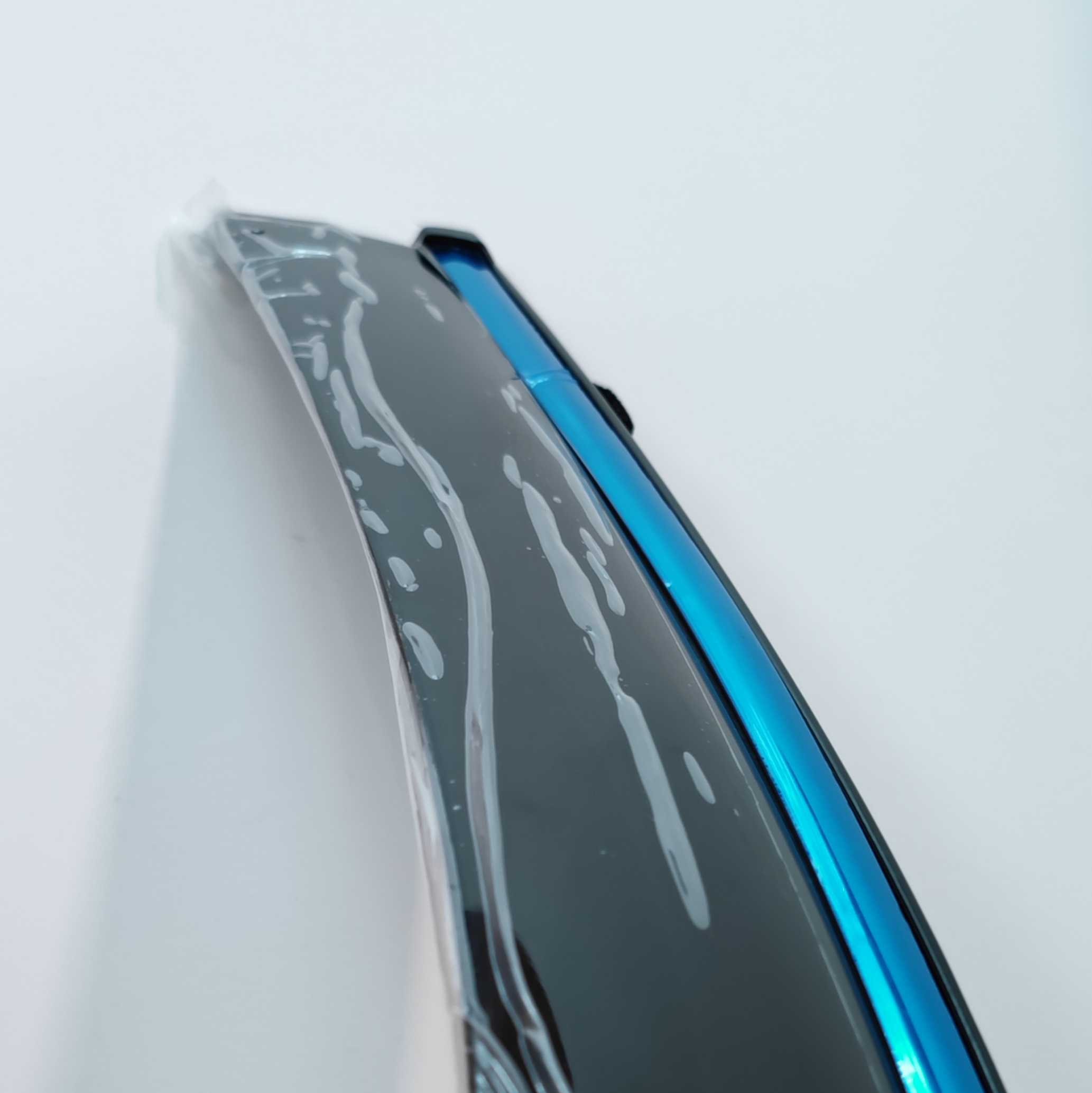
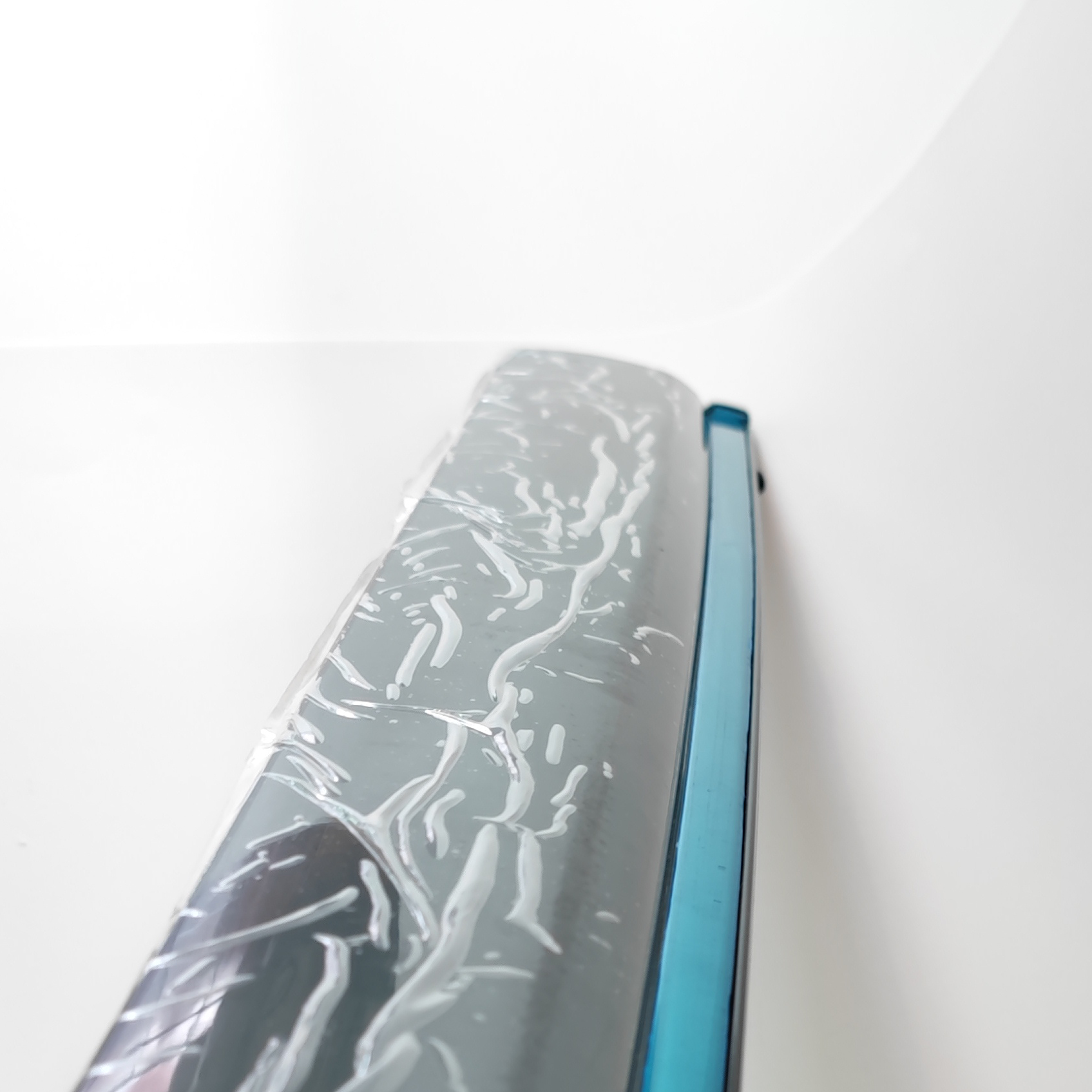
The color of the protective film covers on the chrome/steel trim is transparent or blue. The color can be custom built by buyer.
| Electroplated Bright Strip Shape Design Electroplated bright trims are processed with chrome plating technology on high-quality plastic blanks. The processed chrome-plated bright trim can present a more shiny metallic luster under high light compared to 3D stainless steel decorative strips. When touched by hand, the curvature of the electroplated bright trim is more three-dimensional and rounder than that of the 3D stainless steel chrome trim. To improve weather resistance characteristics, anti-oxidation surface treatment can be applied to electroplated bright trims. Electroplated bright trim s are usually matched with PS materials. |
![]() Mirror stainless steel design with PS material main body | Mirror Stainless Steel Design The design of mirror stainless steel creates a nearly embedded installation for the chrome trim, which is smoothly installed in the groove of the door visor. The chrome trim fits smoothly into the groove of the door visor, providing a smooth feel when touched by hand. This smooth design reflects light differently from 3D stainless steel designs, with a single reflection angle that makes it look more like a flat mirror when reflecting objects. The large curvature of the door visor main body complements the smooth decorative design, creating an obvious turning point relationship and enhancing its overall aesthetic appeal. |
![]() 3D stainless steel design with PC material main body
The PC material of the door visor can be bent to a large extent | 3D Stainless Steel Design The shape of the 3D stainless steel trim is more three-dimensional and rounded than the mirror stainless steel shape. The top and bottom sides of the chrome trim and the protruding vertex in the middle form a curved design. When touched by hand, you can intuitively feel the change in curvature. This curved shape produces varying reflection effects under high light at different angles. The main body of the door visor itself already has a certain curve design, and when they are paired together, they show a more traditional design style. 3D Stainless steel chrome trims are commonly used with PC material door visors. The flexibility of the PC material allows for this type of door visor with such a design can be bent to a large extent. |
Auto parts are essential components for the proper functioning of vehicles used in car assembly lines or for maintenance and repair services after purchase. Autobridge™ (Xiamen) provides a wide range of OES, aftermarket replacement parts, including AC compressors, cylinder heads, oil pumps, power steering pumps, starter motors, and turbochargers. These components are installed in powertrains, steering systems, rear axle assemblies, and chassis assemblies. Auto parts need to meet the design specifications and performance requirements of the original equipment manufacturer (OEM) parts, as well as comply with local regulations or CAPA certification. Depending on the requirements based on OEMs (Original Equipment Manufacturers) for material or design improvements, aftermarket parts may outperform the original genuine parts.
Car accessories are AFTERMARKET MODIFIED PARTS for cars after the production line. Autobridge™ (Xiamen) offers a variety of accessories, including an airflow snorkel, bumper, door visors, matting, spoiler, and trunk tray. The car accessories are not performance parts and generally do not affect the original power and safety. They are used to modify the appearance style, enhance off-road capabilities, or increase driving comfort. Compared to the genuine accessories, we offer customization services for aftermarket replacement accessories that cater to the buyer's specific requirements. Each accessory can be designed specifically for different car models.
The Hijet and the Gran Max—one is the ultimate space-saving product under Japan's micro commercial vehicle regulations, and the other is a globalized model that broke free from those constraints to reach the pinnacle of practicality. Whether navigating narrow Tokyo alleys or driving across the vast Southeast Asian market, they demonstrate Daihatsu's "compact cars, big impact" philosophy through solid quality and continuous generational inheritance.
Read More