Nissan Cefiro Door Visors – Side Window Wind Deflectors for a JDM Legend Family
The Nissan Cefiro is one of Nissan's most internationally significant nameplates, spanning three platform generations from 1988 to 2008. The A31 (1988-1994) was a rear-wheel-drive executive sedan sharing its platform with the Skyline R32 and Laurel C33 — today a cult drift platform across Japan, Thailand, Malaysia, the Philippines, Australia, and New Zealand. The A32 (1994-2000) and A33 (1998-2008) shifted to front-wheel-drive, sharing platforms with the North American Infiniti I30/I35, the European and Australian Maxima QX, and the Korean Renault Samsung SM5. The Teana J31 (2003-2008) succeeded the Cefiro in Asian and Chinese markets, produced domestically in China by Dongfeng Nissan from 2004.
AutoBridge supplies precision-molded door visors (also known as vent visors, rain guards, side window wind deflectors) engineered to each generation's specific door frame geometry. Our visors cover all five fitment configurations listed on this product page, spanning four platform generations and six nameplate variants.
Fitment Coverage
1988-1994 Cefiro A31 (1st-Gen) – RWD platform; sedan and wagon body styles. Sold in Japan (JDM) and exported to Latin America, Turkey, and Gulf States as the Nissan Laurel Altima. Cult drift platform with RB-series engine interchangeability. Door frame unique to A31 — visors are NOT interchangeable with A32/A33.
1994-2000 Cefiro A32 (2nd-Gen) – FWD platform; sedan only. Sold as Infiniti I30 (North America, 1996-2000) and Maxima QX (Europe/Australia). Renault Samsung SM5 1st generation (Korea, 1998-2005) shares the same door frame geometry.
1998-2008 Cefiro A33 (3rd-Gen) – Updated FWD platform; sedan only. Final JDM Cefiro generation (discontinued in Japan 2003, continued in export markets through 2008). Sold as Infiniti I35 (North America, 2002-2004), Maxima QX (Europe/Australia), and Renault Samsung SM5 2nd generation (Korea, 2005-2012). Door frame shared with A32 — visors are interchangeable between A32 and A33 sedans.
2002-2004 Infiniti I35 (A33) – North American luxury nameplate for the A33 Cefiro. Mechanically identical to JDM A33 Cefiro — same door frame, same visor specification. Discontinued after 2004 model year; replaced by Infiniti M35.
2003-2008 Teana J31 (1st-Gen) – Successor to Cefiro, FWD platform. Sold in Japan, China (Dongfeng Nissan domestic from 2004), Southeast Asia, and the Middle East. Completely redesigned body — distinct door frame from A31-A33, requiring its own visor specification.
Machining Details
The machining accuracy of injection molding is relatively better than plastic uptake process, its machinable thickness is controlled at 2.0mm to 2.5mm.
The mold opening cost of plastic uptake process is lower than injection molding, its machinable thickness is controlled at 1.2mm to 1.8mm.
The widening of door visors are based on the car models.
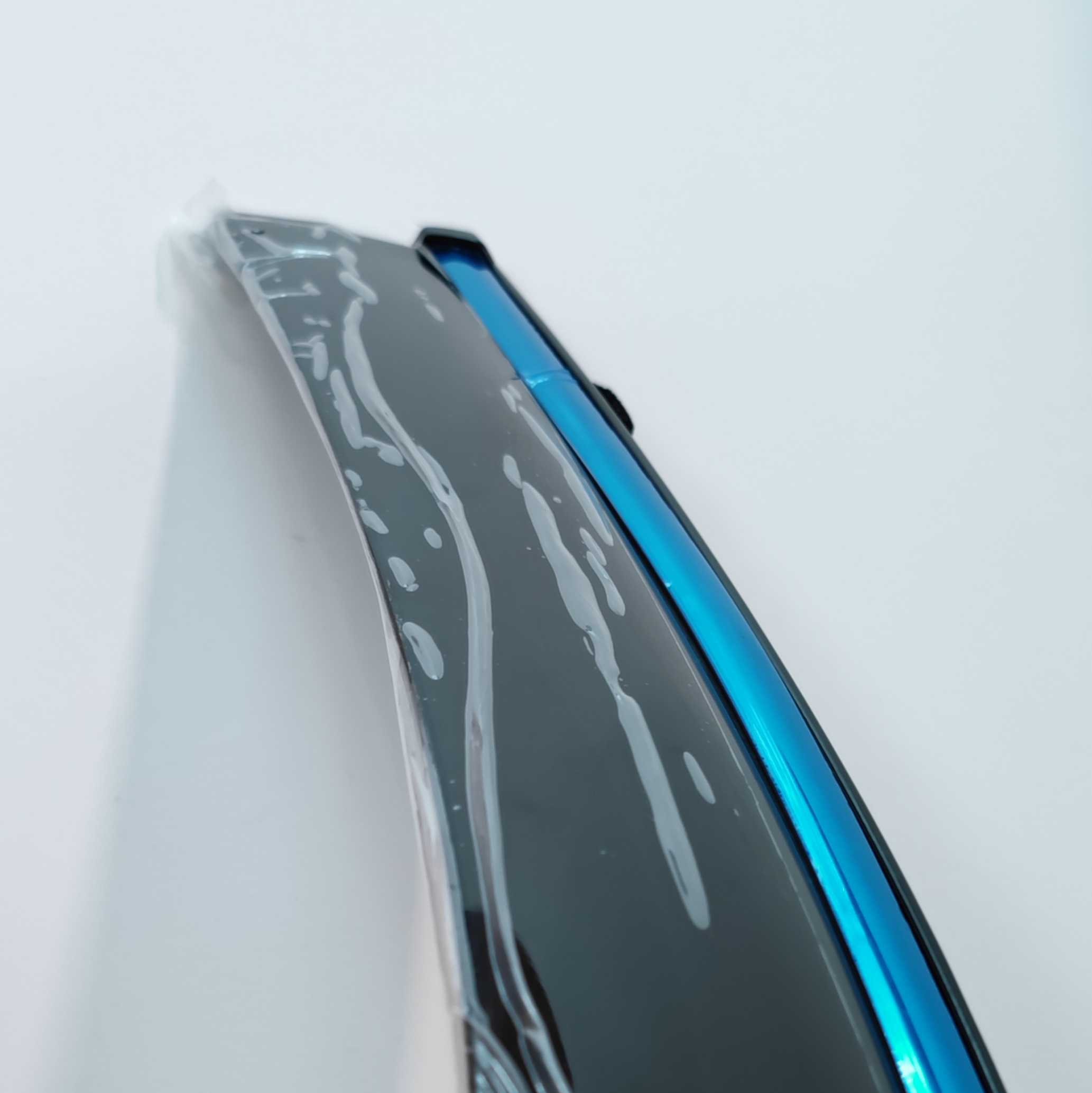
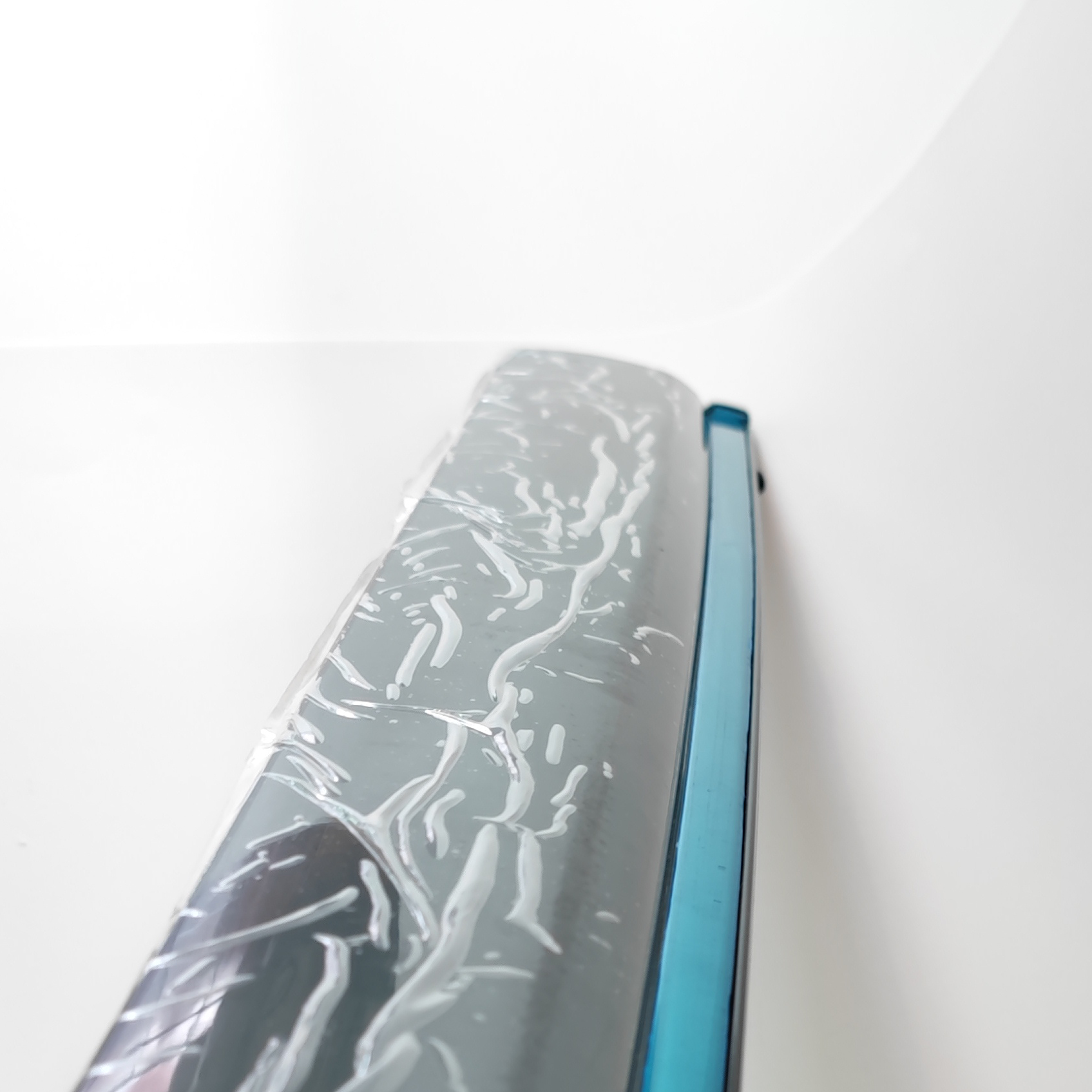
The color of the protective film covers on the chrome/steel trim is transparent or blue. The color can be custom built by buyer.
Why Cefiro Owners Choose Aftermarket Door Visors
For JDM enthusiasts across Japan and Southeast Asia, door visors are an essential comfort upgrade for A31 drift and show cars parked at circuits and meets — allowing window-down ventilation during summer without rain ingress. For maintenance networks in Thailand, Malaysia, and Indonesia, where the Cefiro A32/A33 and Teana J31 remain common mid-size sedans, replacement door visors are a high-demand aftermarket item for vehicles whose original visors have yellowed or cracked after years of tropical UV exposure. In the Middle East, where Cefiro and Teana were popular executive sedans, door visors reduce cabin temperatures by allowing parked vehicles to ventilate through cracked windows during extreme summer heat. In Korea, the Samsung SM5 — a badge-engineered A33 — remains a common fleet and family sedan, creating steady demand for compatible visors. For North American Infiniti I30/I35 owners, aftermarket visors provide a cost-effective alternative to discontinued OEM parts.
The Cefiro family spans a critical platform transition: the A31 is rear-wheel-drive (shared with Skyline R32 and Laurel C33), while the A32 and A33 are front-wheel-drive (shared with the Maxima). This means A31 door visors are unique and cannot be shared with later generations. Within the FWD generations, the A32 and A33 share the same front door window aperture and visors are interchangeable. The Infiniti I35 is mechanically identical to the A33 Cefiro — same door frame, same visor specification. The Samsung SM5 (both 1st and 2nd generation) also shares the A32/A33 door frame. The Teana J31, while a direct successor, has a completely redesigned body and requires its own visor specification — hence its separate fitment chip on this product page. Buyers should confirm their vehicle's chassis code (A31, A32, A33, or J31) before ordering to ensure correct visor fitment.
Product Overview & Generation Identification
Identifying Your Cefiro Generation
Before ordering door visors, confirm your vehicle's generation using the chassis code and visual identifiers below:
A31 (1988-1994) – RWD; boxy angular body, rectangular headlights, RB-series engine (RB20DE/DET, RB25DE/DET). Check chassis code on firewall or registration documents. Common in JDM import markets and drift communities.
A32 (1994-2000) – FWD; rounded biodesign-era body, VQ-series V6 engine (VQ20DE, VQ25DD). Sold as Infiniti I30 in North America and Maxima QX in Europe and Australia.
A33 (1998-2008) – FWD; updated front fascia with larger headlights, VQ-series V6 (VQ20DE, VQ25DD, VQ35DE). Sold as Infiniti I35 in North America (2002-2004). Final Cefiro generation.
J31 Teana (2003-2008) – FWD; all-new body design, taller greenhouse. Check for "Teana" badging on trunk lid. Dongfeng Nissan domestic production in China from 2004.
Material Selection by Climate
PC (Polycarbonate): Highest impact resistance and flexibility. Recommended for markets with extreme temperature swings (Middle East, continental climate zones). Can be bent significantly without cracking — ideal for in-channel installation on older vehicles with hardened window channel rubbers.
Acrylic (PMMA): Best optical clarity and UV resistance. Recommended for tropical Southeast Asian markets where long-term sun exposure yellows cheaper materials. Slightly more brittle than PC — best suited for tape-on or out-channel mounting.
PS (Polystyrene): Most cost-effective option. Suitable for temperate climates and shorter expected service life. Commonly paired with electroplated chrome trim for a premium appearance at lower cost.
Manufacturing Process
Injection Molding: Machinable thickness controlled at 2.0mm to 2.5mm. Superior dimensional accuracy ensures consistent fit across production batches. Higher tooling cost but preferred for B2B wholesale orders requiring quality consistency.
Plastic Uptake (Vacuum Forming): Machinable thickness controlled at 1.2mm to 1.8mm. Lower mold opening cost — economical for smaller batch orders or custom designs. Slightly less precise dimensional tolerance than injection molding.
The widening of door visors is based on the car models. The color of the protective film covers on the chrome/steel trim is transparent or blue, and can be custom built by buyer request.