TIP: Search results will list the matched SKUs.
About Autobridge™ » Car Accessories Range » Car Brands » Suzuki » Vitara » 1988-Present Suzuki Vitara Window Deflectors | Four-Generation Lineage

loading

Share to:
linkedin sharing button
facebook sharing button
line sharing button
whatsapp sharing button
sharethis sharing button

1988-Present Suzuki Vitara Window Deflectors | Four-Generation Lineage

  • Suzuki Vitara

  • 100 sets

  • FOB,  CIF

  • T/T,  L/C,  Credit Card,  Western Union

  • USD,  EUR,  HKD

  • Suzuki Grand Vitara, Suzuki Escudo, Suzuki Sidekick, Mazda Proceed Levante, Santana 300/350, Chevrolet Tracker, Geo Tracker, Chevrolet Grand Vitara, GMC Tracker, Pontiac Sunrunner, Asüna Sunrunner, Wanli WLZ5020XLD, Guangtong GTQ5020XLZ

  • 1988-1998, 1998-2005, 2005-2017, 2015-Present

  • Door Visors

  • door visors, vent visors, rain guards

Fitment:
Body Style:
SKU:
Availability:
Quantity:
  • Export-ready for Suzuki Vitara and 13 rebadge variants across 4 generations (1988-present), from the CAMI-built Sidekick and Tracker to the current Hungarian-made LY crossover.
  • Vehicle-specific molding matches each generation's door frame contours: ET/TA, FT/GT, JT, and LY platforms, covering 2-door, 3-door, and 5-door body styles.
  • Direct-fit design reduces wind noise and channels fresh air into the cabin while keeping rain out, ideal for humid Southeast Asian and Middle Eastern driving climates.
  • Custom-molded from PC or acrylic with optional chrome or steel trim lining, available in black, smoke, translucent, and 2-tone finishes with clip-on, tape-on, or in-channel installation.

Suzuki Vitara owners looking for door visors will find comprehensive coverage across all four generations of this pioneering compact SUV. From the 1988 ladder-frame original to the 2015 TNGA-based crossover, each generation's door frame geometry is mapped to a specific molding profile.

Four-Generation Fitment Matrix

Generation

Chassis Code

Years

Body Styles

Key Markets

1st Gen

ET/TA

1988-1998

2-door soft top, 3-door hard top, 5-door hard top

Japan, North America, Europe, Australia

2nd Gen

FT/GT

1998-2005

3-door, 5-door

Japan, Europe, North America, Latin America

3rd Gen

JT

2005-2017

3-door, 5-door

Japan, Europe, Latin America, India

4th Gen

LY

2015-Present

5-door

Europe (Hungary-built), Japan, India, Latin America

Production Sites by Generation

  • 1st Gen (ET/TA): Kosai (Japan), CAMI Ingersoll (Canada), Santana Linares (Spain)

  • 2nd Gen (FT/GT): Kosai (Japan), Iwata (Japan), CAMI (Canada)

  • 3rd Gen (JT): Iwata (Japan), Sagara (Japan), Gurgaon (India)

  • 4th Gen (LY): Magyar Suzuki Esztergom (Hungary), Maruti Suzuki Gurgaon (India)

Body Style Notes

  • 2-door soft top: 1st gen only, removable canvas roof, door visor molding follows the narrower A-pillar-to-B-pillar span

  • 3-door hard top: Available 1st through 3rd gen, shorter door vs 5-door variant, visor length differs

  • 5-door hard top: Available all 4 generations, longest door span, most common export body style

Material and Design Options

Available in three primary materials:

  • PC (Polycarbonate): High flexibility, impact-resistant, pairs with 3D stainless steel trim

  • Acrylic (PMMA): Optically clear, rigid, pairs with mirror stainless steel trim

  • PS (Polystyrene): Cost-effective, pairs with electroplated bright strip trim

Color styles: Black, Translucent, Smoke, 2-Tone. Installation methods: Clip-on, Tape-on, In-Channel, Out-Channel.

Design Variants and Manufacturing Process

Chrome Trim Design Options

Three chrome trim styles are available, each paired with a specific main-body material:

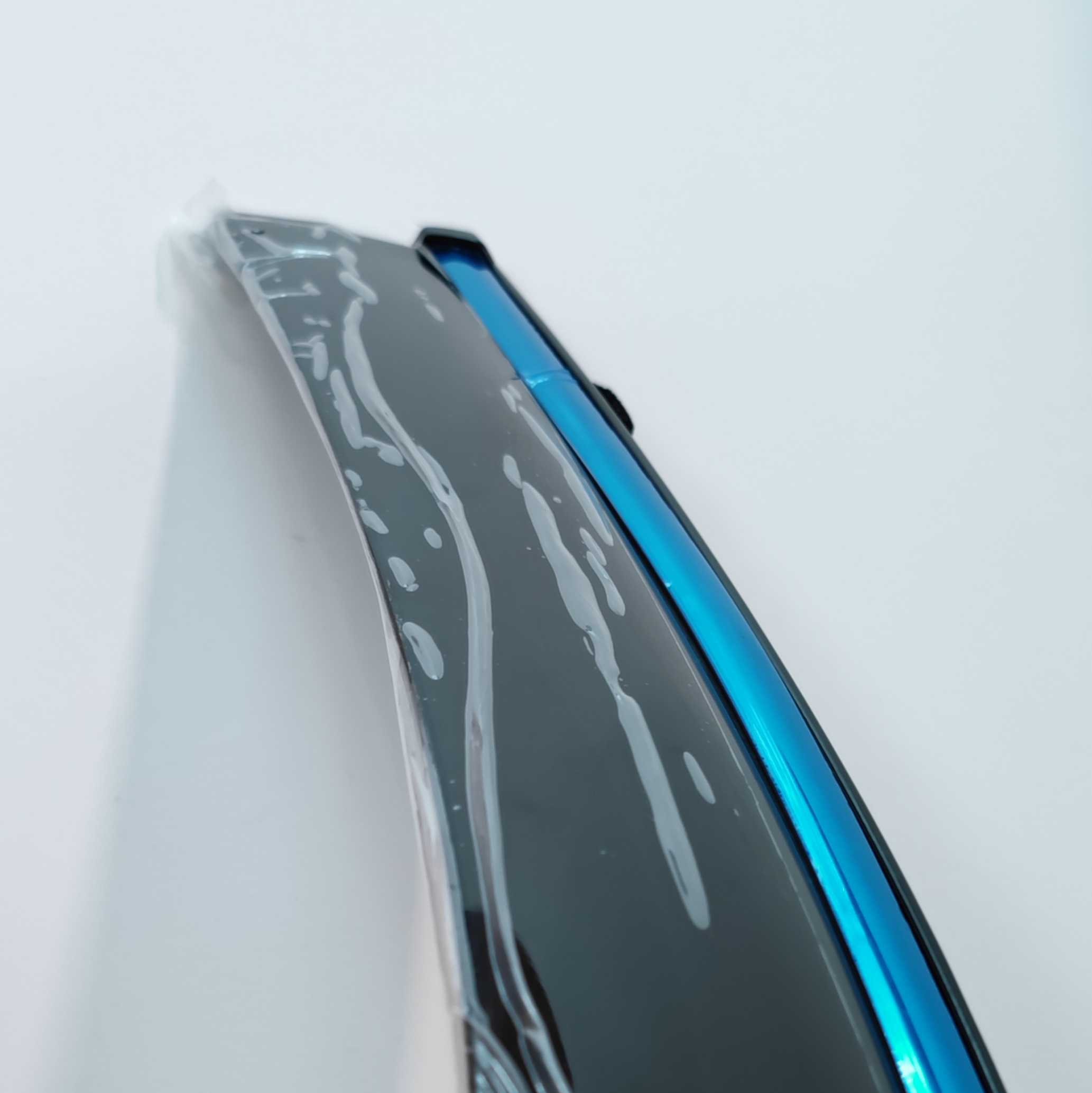
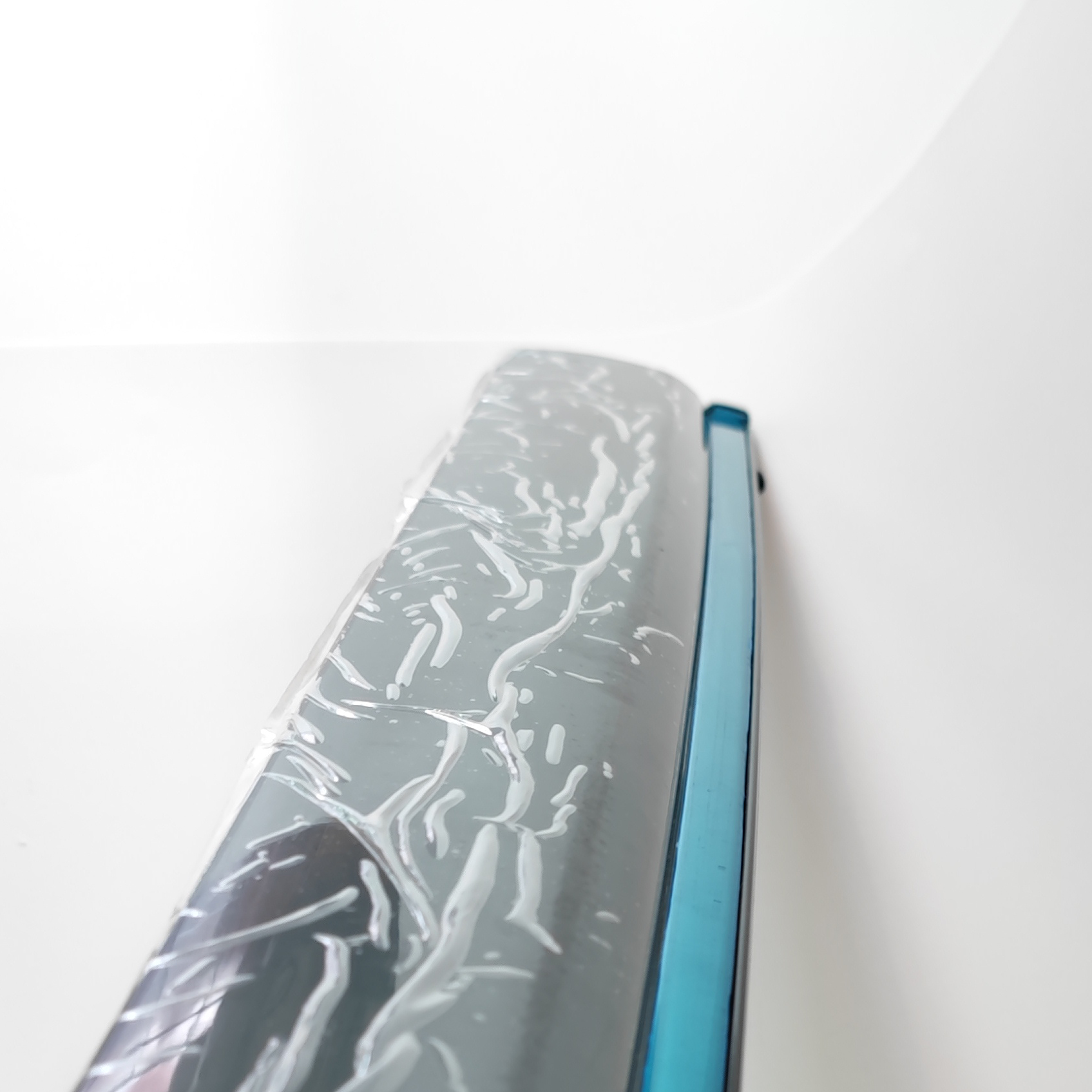
  • Electroplated Bright Strip: Chrome plating on PS plastic blanks. Produces a shiny metallic luster under high light. The curvature is more three-dimensional and rounder than 3D stainless steel. Anti-oxidation surface treatment available for weather resistance. Typically paired with PS material.

  • Mirror Stainless Steel: Nearly embedded installation in the door visor groove. The chrome trim fits smoothly, providing a flat-mirror reflection effect. The large curvature of the visor body complements this smooth design. Pairs with acrylic (PMMA) material.

  • 3D Stainless Steel: Top and bottom sides with a protruding vertex in the middle form a curved design. Produces varying reflection effects under different light angles. Pairs with PC material, which allows the visor to be bent to a large extent.

Manufacturing Process Comparison

Process

Machinable Thickness

Mold Cost

Best For

Injection Molding

2.0mm - 2.5mm

Higher

High-precision, high-volume orders

Plastic Uptake (Vacuum Forming)

1.2mm - 1.8mm

Lower

Cost-sensitive, smaller batch runs

Customization Options

  • Width: Door visor width varies by car model and door frame dimensions

  • Chrome/Steel Trim Film: Protective film covers available in transparent or blue, custom colors available on request

  • MOQ: 100 sets minimum order quantity

  • Delivery Terms: FOB, CIF

  • Payment: T/T, L/C, Credit Card, Western Union

  • Currency: USD, EUR, HKD

Rebadge Cross-Reference: 13 Nameplates Across 4 Generations

The Suzuki Vitara has one of the richest rebadge histories of any compact SUV, owing to the Suzuki-GM partnership (CAMI Automotive joint venture in Canada). The table below maps each nameplate to its applicable generation.

Nameplate-to-Generation Matrix

Nameplate

Generation

Market

Production

Suzuki Vitara

1st, 4th Gen

Global (excl. Japan)

Japan, Hungary

Suzuki Escudo

All 4 Gens

Japan (JDM)

Japan

Suzuki Grand Vitara

2nd, 3rd Gen

Global (excl. Japan)

Japan, India

Suzuki Sidekick

1st Gen only

North America

CAMI (Canada)

Geo Tracker

1st Gen only

United States

CAMI (Canada)

Chevrolet Tracker

1st Gen only

North America, Latin America

CAMI (Canada)

GMC Tracker

1st Gen only

Canada

CAMI (Canada)

Pontiac Sunrunner

1st Gen only

Canada

CAMI (Canada)

Asüna Sunrunner

1st Gen only

Canada

CAMI (Canada)

Mazda Proceed Levante

1st Gen only

Japan (JDM)

Japan

Santana 300

1st Gen (3-door)

Spain, Southern Europe

Santana Linares (Spain)

Santana 350

1st Gen (5-door)

Spain, Southern Europe

Santana Linares (Spain)

Chevrolet Grand Vitara

2nd/3rd Gen

Latin America

Japan (export)

Wanli WLZ5020XLD

1st Gen

China

China (homologation)

Guangtong GTQ5020XLZ

1st Gen

China

China (homologation)

Generation-Specific Door Visor Differences

Door frame geometry differs significantly across 4 generations. Each generation requires its own molding profile:

  • 1st Gen (ET/TA): Boxy, upright door frame. 2-door convertible has narrower doors than 3-door/5-door. Door visor has the most angular profile of all generations.

  • 2nd Gen (FT/GT): Rounded door frame, larger windows. 3-door and 5-door share similar curvature but different lengths.

  • 3rd Gen (JT): Monocoque body, more steeply raked A-pillar. Door frame curvature is tighter than 2nd gen.

  • 4th Gen (LY): Crossover styling, significantly different from 1st-3rd gen. Only 5-door body style. Most aerodynamic door frame of all generations.

Not Interchangeable: Platform Relatives

The following vehicles share platforms or DNA with the Vitara but have different body panels and are not compatible:

  • Suzuki X-90 (1995-1997): Mechanically identical to 1st gen Vitara but completely different round body with trunk and T-bar roof. Door frame is unrelated.

  • Suzuki XL-7 / Grand Escudo (2001-2007): Extended-wheelbase 7-seater built on Grand Vitara platform. Longer doors, different window geometry.

  • Suzuki SX4 S-Cross (2013-present): Shares platform with 4th gen Vitara (LY) but different body dimensions and door frame shape.

  • Maruti Suzuki Grand Vitara (2022+, India): Reuses the "Grand Vitara" nameplate but is an entirely different vehicle based on the Toyota Urban Cruiser Hyryder platform. Not related to the LY Vitara.

  • Suzuki Jimny: Smaller ladder-frame 4x4, different platform, different door dimensions.

Facelift Compatibility Notes

  • 1st Gen facelift (1996): Exterior refresh, door frame unchanged. All 1988-1998 visors are interchangeable within this generation.

  • 2nd Gen facelift (2001): Minor grille and trim updates. Door frame geometry unchanged.

  • 3rd Gen facelift (2012): Front and rear bumper updates. Door frame stampings unchanged.

  • 4th Gen facelift (2020): Updated front grille and headlights. Door frame profile unchanged through 2025.

JDM Escudo Discontinuation Note

The Japanese domestic market Escudo was discontinued in April 2024. The 4th gen LY Vitara continues in production at Magyar Suzuki (Hungary) for global markets. JDM inventory remains available through Japanese dealer networks for the 2024 model year.

Material
PC
Acrylic (PMMA)
PS
Design Style
Original
Mugen
Chrome Lining/Trim
Steel Lining/Trim
Color Style
Black
Translucent
Smoke
2-Tone
Installation
Clip on
Tape on
In Channel
Out Channel

Chrome trim for door visors --- Electroplated bright strip shape designElectroplated bright strip shape design with PS material main body

Electroplated Bright Strip Shape Design

Electroplated bright trims are processed with chrome plating technology on high-quality plastic blanks. The processed chrome-plated bright trim can present a more shiny metallic luster under high light compared to 3D stainless steel decorative strips. When touched by hand, the curvature of the electroplated bright trim is more three-dimensional and rounder than that of the 3D stainless steel chrome trim. To improve weather resistance characteristics, anti-oxidation surface treatment can be applied to electroplated bright trims. Electroplated bright trim s are usually matched with PS materials.

Chrome trim for door visors --- Mirror stainless steel design

Mirror stainless steel design with PS material main body

Mirror Stainless Steel Design

The design of mirror stainless steel creates a nearly embedded installation for the chrome trim, which is smoothly installed in the groove of the door visor. The chrome trim fits smoothly into the groove of the door visor, providing a smooth feel when touched by hand. This smooth design reflects light differently from 3D stainless steel designs, with a single reflection angle that makes it look more like a flat mirror when reflecting objects. The large curvature of the door visor main body complements the smooth decorative design, creating an obvious turning point relationship and enhancing its overall aesthetic appeal.

Chrome trim for door visors --- 3D stainless steel design

3D stainless steel design with PC material main body

The PC material of the door visor can be bent to a large extent by hand

The PC material of the door visor can be bent to a large extent

3D Stainless Steel Design

The shape of the 3D stainless steel trim is more three-dimensional and rounded than the mirror stainless steel shape. The top and bottom sides of the chrome trim and the protruding vertex in the middle form a curved design. When touched by hand, you can intuitively feel the change in curvature. This curved shape produces varying reflection effects under high light at different angles. The main body of the door visor itself already has a certain curve design, and when they are paired together, they show a more traditional design style. 3D Stainless steel chrome trims are commonly used with PC material door visors. The flexibility of the PC material allows for this type of door visor with such a design can be bent to a large extent.

  • About Product Pics

    The product images displayed on the product pages are real photographs, provided for reference purposes only. To help users clearly identify the corresponding positions of compatible models (for example, a close-up of the rear trunk area outline), certain images are quoted from the Autohome or others open databases. The copyright of these reference images belongs to the websites.
     
    We welcome custom orders, wholesale inquiries, and export business for aftermarket parts and accessories. Product specifications shall follow the production requirements confirmed by buyers. Please kindly note that the actual goods delivered shall be based on the contract agreement and final inspection results.
  • The Description Difference between Model Years and Production Years

    Due to our use of open network databases, like Wikipedia and Autohome, for some of our vehicle data, there might be minor variations in the descriptions found in our SKU designs. "Production Years" are the years when a specific model is first introduced to the public market. On the other hand, "Model Years" refer to the different versions of a model that were available to consumers in different years. These differences in model years often come with changes to the exterior or interior design of the vehicle. When searching for car information on websites or through dealers, typically you are searching based on 'Model Years'. For instance, the third generation of the Honda Accord was introduced on June 4th, 1985, and ceased production in 1989. ‘1985-1989’ represents the ‘Production Years’ of the Accord, while the ‘Model Years’ in automobile databases are listed as ‘1986-1989’. Due to the different sources of information, there may be differences in the way they are presented. As our products cover car parts and accessories, we have incorporated both "Production Years" and "Model Years" terminology. Please note this.
  • Compatibility Description of Auto Parts

    Auto parts are essential components for the proper functioning of vehicles used in car assembly lines or for maintenance and repair services after purchase. Autobridge™ (Xiamen) provides a wide range of OES, aftermarket replacement parts, including AC compressors, cylinder heads, oil pumps, power steering pumps, starter motors, and turbochargers. These components are installed in powertrains, steering systems, rear axle assemblies, and chassis assemblies. Auto parts need to meet the design specifications and performance requirements of the original equipment manufacturer (OEM) parts, as well as comply with local regulations or CAPA certification. Depending on the requirements based on OEMs (Original Equipment Manufacturers) for material or design improvements, aftermarket parts may outperform the original genuine parts.

  • Compatibility Description of Car Accessories

    Car accessories are A​FTERMARKET MODIFIED PARTS for cars after the production line. Autobridge™ (Xiamen) offers a variety of accessories, including an airflow snorkel, bumper, door visors, matting, spoiler, and trunk tray. The car accessories are not performance parts and generally do not affect the original power and safety. They are used to modify the appearance style, enhance off-road capabilities, or increase driving comfort. Compared to the genuine accessories, we offer customization services for aftermarket replacement accessories that cater to the buyer's specific requirements. Each accessory can be designed specifically for different car models.

Exploring Daihatsu's Commercial Vehicle Duo: The Generational Lineage and History of Hijet and Gran Max
2026/06/02

The Hijet and the Gran Max—one is the ultimate space-saving product under Japan's micro commercial vehicle regulations, and the other is a globalized model that broke free from those constraints to reach the pinnacle of practicality. Whether navigating narrow Tokyo alleys or driving across the vast Southeast Asian market, they demonstrate Daihatsu's "compact cars, big impact" philosophy through solid quality and continuous generational inheritance.

Read More
cover-pic-daihatsu-hijet-gran-max-generations-history.jpg

AUTOBRIDGE™ (Xiamen)
Vehicle Parts Supply

We export auto parts and car accessories. Kindly RFQ, we will send you a quotation promptly.
Contact us
Yao-Jiang-Li #105-1101, Dist TongAn, Xiamen, China
86.13859907600 /Aven
86.18016569776 /Yolanda
Copyright © 2018-2024 AutoBridge™ (Xiamen) Vehicle Parts Ltd,. |  Privacy and CookiesSitemap

Your Cookie Controls:

 
AUTOBRIDGE™ (Xiamen) Vehicle Parts Supply uses cookies to improve user experience and site performance. Where required by applicable law, we will obtain your consent before we place any cookies on your device that are not strictly necessary for the functioning of our websites. By clicking "X", you agree to our use of cookies. Learn about our cookies in our Privacy and Cookies.
×