Toyota Rush / Daihatsu Terios Door Visors — Side Window Wind Deflectors for Toyota-Daihatsu's Compact 7-Seater SUV Family
The Toyota Rush is a compact 7-seater body-on-frame SUV developed jointly by Toyota and Daihatsu, purpose-built for emerging markets across Southeast Asia, the Middle East, Africa, and Latin America. Since its 2006 debut, the Rush has been sold under multiple nameplates — Daihatsu Terios (Japan, global), Daihatsu Be-go (Japan 2nd Gen), Perodua Nautica (Malaysia 2nd Gen), Perodua Aruz (Malaysia 3rd Gen), and Toyota Cami (Japan 1st Gen) — reflecting Toyota-Daihatsu's badge-engineering strategy for maximizing market penetration. The Rush is consistently among the top-selling compact SUVs in Indonesia, where Toyota and Daihatsu together command over 50% market share, and maintains strong sales in the Philippines, Bangladesh, Malaysia, Pakistan, UAE, South Africa, Jamaica, Colombia, and Brunei.
AutoBridge supplies door visors — also called vent visors, rain guards, or side window wind deflectors — precision-molded to fit the Rush/Terios door frame geometry across all three generations. Because the Toyota-Daihatsu platform maintains consistent front-door window channel dimensions across the J200 (2006-2017) and F800 (2018-Present) chassis, a single door visor SKU covers the entire Rush/Terios/Aruz/Be-go/Nautica family — spanning 8+ nameplates and 15+ countries. This cross-nameplate compatibility makes the Rush door visor one of the most inventory-efficient SKUs in AutoBridge's catalog for B2B importers serving multiple emerging markets simultaneously.
Fitment Coverage — 3 Generations Across 8+ Nameplates
Generation | Chassis | Years | Nameplate(s) | Key Markets |
|---|
1st Gen | J100 / F500 | 1997–2006 | Daihatsu Terios, Terios Kid, Toyota Cami, Perodua Kembara, Daihatsu Taruna, Huali Dario Terios, Zotye 2008/Hunter, Premier RiO | Japan, Indonesia, Malaysia, China, India |
2nd Gen | J200 / F700 | 2006–2018 | Toyota Rush, Daihatsu Terios / D-Compact 4x4 (Europe), Daihatsu Be-go (Japan), Perodua Nautica (Malaysia) | Indonesia, Japan, Europe, South America, Malaysia, Singapore, Chile |
3rd Gen | F800 / F850 | 2018–Present | Toyota Rush, Daihatsu Terios, Perodua Aruz | Indonesia, Philippines, Bangladesh, UAE, South Africa, Jamaica, Colombia, Pakistan, Brunei, Malaysia |
Note: 2nd Gen (J200/F700) and 3rd Gen (F800/F850) share compatible front-door window channel geometry — a single door visor set fits both generations. 1st Gen (J100/F500) requires separate visor fitment verification due to smaller body dimensions. 1st Gen Terios Kid (compact 3-door variant) has unique shorter door frame dimensions — confirm with AutoBridge before ordering for Terios Kid compatibility.
Why Rush/Terios Owners Choose Aftermarket Door Visors
The Rush/Terios is a purpose-built vehicle for climates where air conditioning is a luxury, not a given — particularly in lower-trim variants sold across Indonesia's outer islands, rural Philippines, Bangladesh, and parts of Africa. In these markets, door visors are not an aesthetic accessory but a daily necessity: they allow windows to remain cracked open during torrential monsoon rains, providing ventilation without soaking the interior. In Indonesia — the Rush's largest market where Toyota-Daihatsu collectively hold over 50% of national auto sales — door visors are among the most commonly installed aftermarket accessories on every new Rush leaving the dealership lot. In the Middle East (UAE) and South Africa, owners use vent visors to reduce cabin heat buildup when parked under intense sun, allowing passive ventilation without visible window gaps that invite theft. In Latin American markets (Colombia, Jamaica), the tropical climate mirrors Southeast Asian usage patterns — rain protection with continuous fresh airflow.
For B2B importers, the Rush door visor's cross-nameplate compatibility is a unique inventory advantage: a single SKU order covers not just Toyota Rush but simultaneously Daihatsu Terios, Perodua Aruz, Daihatsu Be-go, and Perodua Nautica — five nameplates under three brands in one consolidated shipment. This allows importers serving multi-brand markets like Indonesia (Rush + Terios sold side by side) or Malaysia (Aruz + Nautica, owned by different brand dealerships) to reduce per-unit landed cost through larger consolidated orders.
Design & Material Options
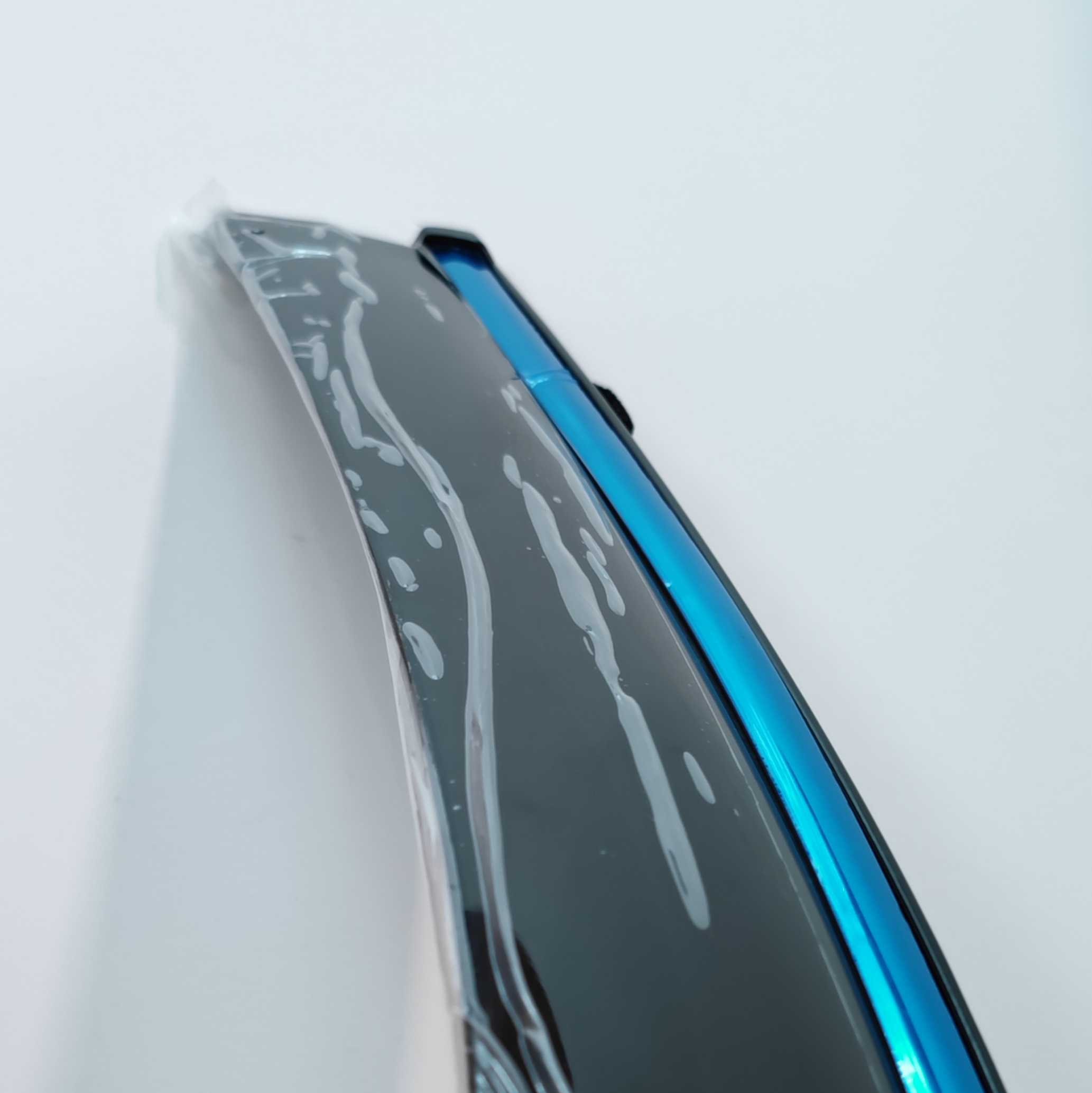
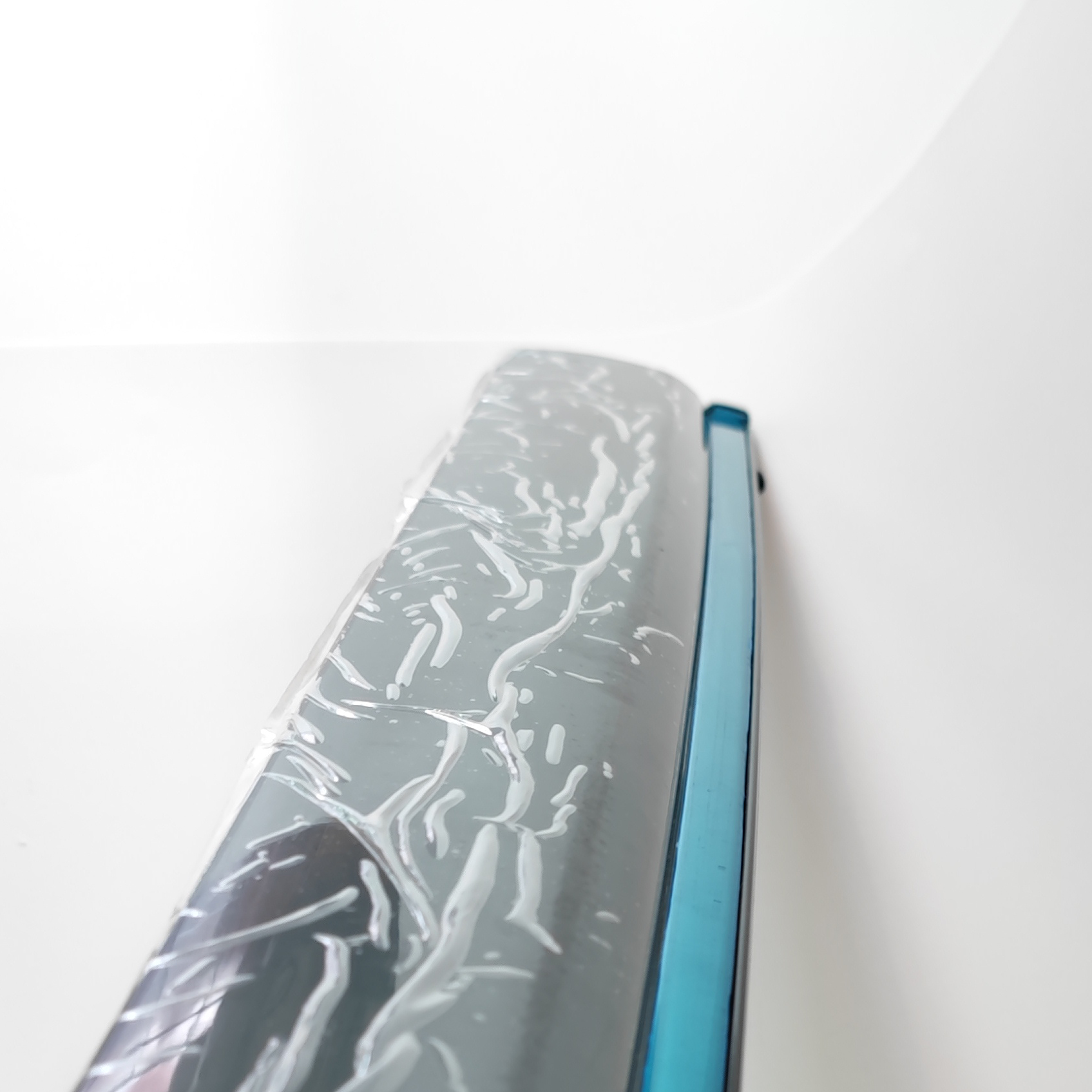
AutoBridge offers Rush/Terios door visors in three material grades: PC (polycarbonate — highest impact resistance, bendable to a large extent, recommended for regions with poor road conditions where stone chips are common), PMMA/acrylic (glass-like clarity, scratch-resistant, preferred for urban markets), and PS (polystyrene — cost-effective, suitable for price-sensitive emerging markets). Three chrome trim designs available: electroplated bright strip (shiny metallic luster, anti-oxidation surface treatment, matched with PS body), mirror stainless steel (smooth embedded groove installation, single-angle reflection, matched with PC body), and 3D stainless steel (rounded three-dimensional curvature, variable-angle reflection, matched with flexible PC material). Color options: black, translucent, smoke, and 2-tone. Mounting: clip-on, tape-on (3M VHB), in-channel, and out-channel — all four methods compatible with J200 and F800 generation door frames.
Door Visor Manufacturing & Chrome Trim Design — Applicable to Toyota Rush / Daihatsu Terios / Perodua Aruz
The following manufacturing specifications and chrome trim design options apply to all Toyota Rush, Daihatsu Terios, Perodua Aruz, Daihatsu Be-go, and Perodua Nautica door visor orders. The Rush/Terios platform's consistent front-door window channel geometry across J200 (2006-2017) and F800 (2018-Present) generations means a single mold set serves all compatible nameplates — reducing tooling cost per unit for larger consolidated orders. For 1st Gen J100/F500 Terios (1997-2006) and Terios Kid (3-door compact variant), separate mold verification is required due to the smaller door frame dimensions.
Manufacturing Process
The machining accuracy of injection molding is relatively better than plastic uptake process, its machinable thickness is controlled at 2.0mm to 2.5mm.
The mold opening cost of plastic uptake process is lower than injection molding, its machinable thickness is controlled at 1.2mm to 1.8mm.
The widening of door visors are based on the car models. For the Rush/Terios 7-seater SUV with tall greenhouse windows, a moderate widening between 35mm–45mm is recommended to balance ventilation performance with aerodynamic noise at highway speeds.
The color of the protective film covers on the chrome/steel trim is transparent or blue. The color can be custom built by buyer.