Volkswagen Taos Door Visors – Side Window Wind Deflectors for VW's Global Compact Crossover SUV
The Volkswagen Taos is a compact five-door crossover SUV built on the MQB A1 platform, positioned between the T-Cross/T-Roc and Tiguan in VW's global SUV lineup. First unveiled in October 2018 as the VW Tharu (途岳) by SAIC-VW for the Chinese market, the vehicle was subsequently introduced as the VW Taos for North America in October 2020 (2021 model year), launched in Russia in mid-2021, and sold as the VW Tarek during its initial rollout in Argentina and Brazil before adopting the Taos name. By 2025, the Taos had become Volkswagen's second best-selling model in the US with annual sales exceeding 58,000 units, while the Tharu remains one of SAIC-VW's top-selling compact SUVs in China.
AutoBridge supplies door visors — also called vent visors, rain guards, side window wind deflectors, or window visors — precision-engineered to the Taos/Tharu/Tarek's specific window channel geometry. All three nameplate variants share identical MQB A1 front-door architecture, enabling a single SKU to serve multiple export markets: North America (Taos), China (Tharu), Russia (Taos), and Latin America (Tarek/Taos). This cross-nameplate compatibility is a significant advantage for B2B importers who can consolidate inventory from one supplier instead of sourcing three separate door visor SKUs.
Fitment Coverage
2018-2020 VW Tharu 途岳 (China, SAIC-VW) – The original MQB A1 compact crossover launched in October 2018. Powered by 1.4T (280TSI) and 2.0T (330TSI) EA211/EA888 engines, available in FWD and 4Motion AWD. This is the earliest production variant and the naming basis for model years starting at 2018.
2021-Present VW Taos (North America) – Launched as a 2021 model year for the US, Canada, and Mexico markets. Powered by a 1.5L TSI EA211 evo turbocharged engine (158 hp, 184 lb-ft). Positioned as the entry-level compact SUV below Tiguan. Front-door window channels are identical to the Tharu — same door pressings from the Puebla, Mexico assembly plant.
2021-Present VW Taos (Russia) – CKD assembly at GAZ Nizhny Novgorod from mid-2021. Shares the same 1.4T EA211 engine as the Chinese Tharu. Front-door geometry matches global MQB A1 specification.
2021-2022 VW Tarek / 2022-Present VW Taos (Latin America) – Initially launched as VW Tarek in Argentina and Brazil at VW's Pacheco (Argentina) and São Bernardo do Campo (Brazil) plants. Nameplate unified to Taos from mid-2022 onward. Same door shell tooling as North American and Chinese variants — our door visors fit both Tarek and Taos badges without modification.
Machining Details
The machining accuracy of injection molding is relatively better than plastic uptake process, its machinable thickness is controlled at 2.0mm to 2.5mm.
The mold opening cost of plastic uptake process is lower than injection molding, its machinable thickness is controlled at 1.2mm to 1.8mm.
The widening of door visors are based on the car models.
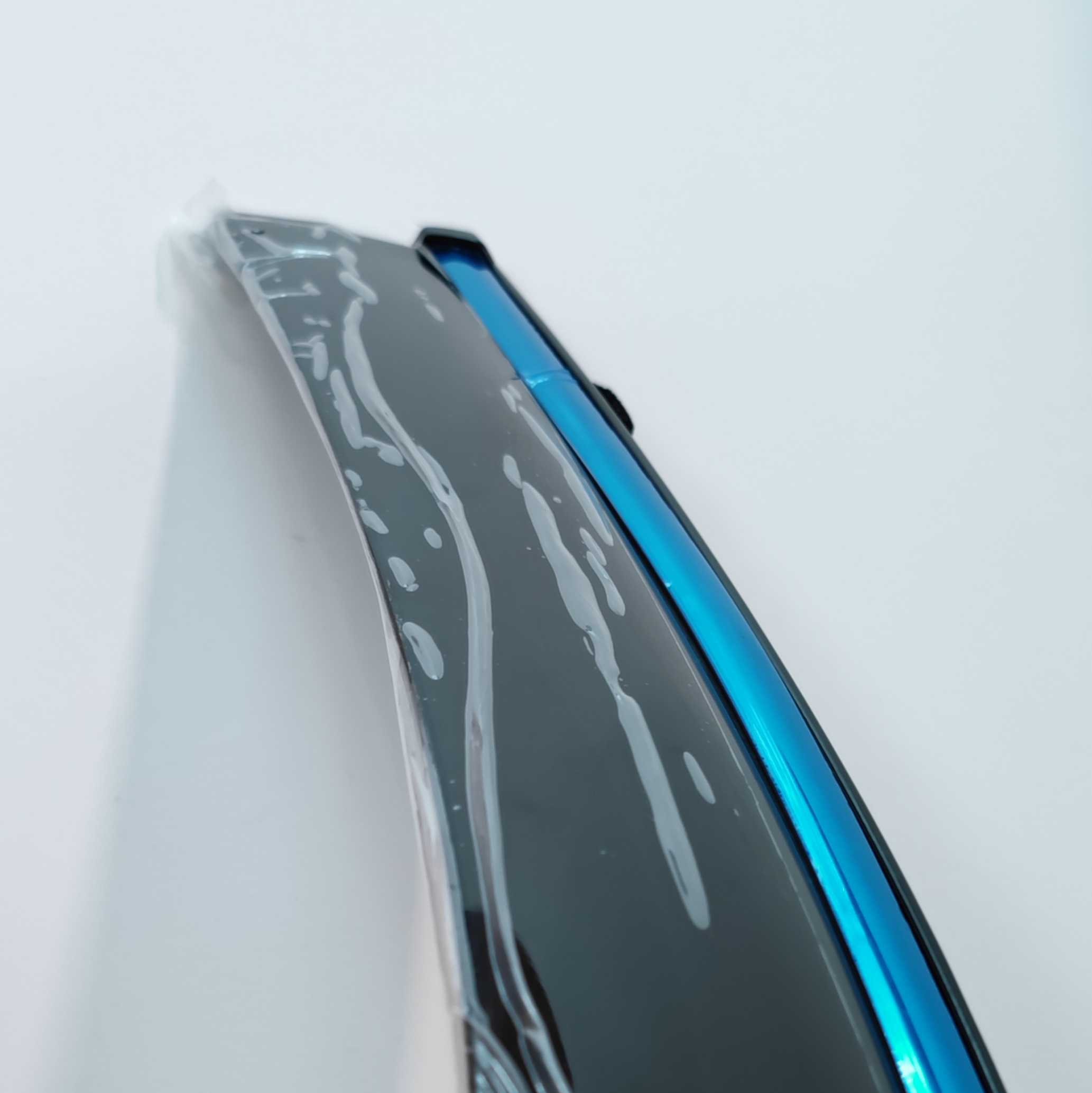
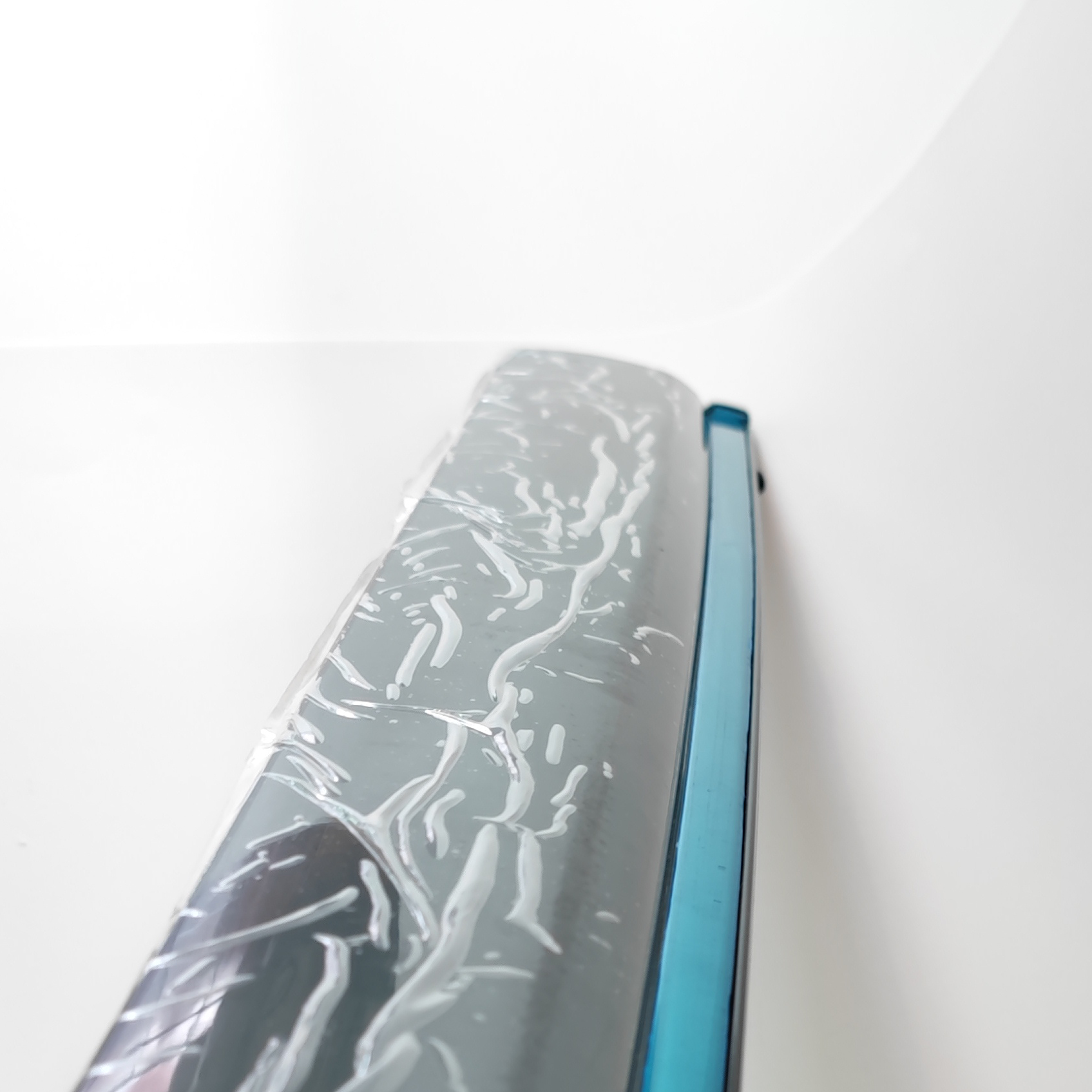
The color of the protective film covers on the chrome/steel trim is transparent or blue. The color can be custom built by buyer.
Why Taos / Tharu / Tarek Owners Choose Aftermarket Door Visors
The Taos's upright greenhouse design delivers excellent outward visibility — a key selling point in the compact crossover segment — but the large side glass area also makes the cabin susceptible to rapid heat buildup when parked and wind buffeting when windows are cracked open at highway speeds. In the US, Taos owners on interstate road trips and suburban commutes install vent visors to reduce wind noise and allow fresh air circulation at 60-75 mph without the buffeting effect. In Brazil and Argentina, where tropical rainfall is frequent and intense during the summer season (December-March), Tarek/Taos owners use rain guards to keep windows partially open for ventilation during sudden downpours. In Russian winter conditions (November-March), Taos drivers use door visors to prevent interior fogging by allowing a small window gap without snow or ice entering the cabin — a critical defogging technique at sub-zero temperatures. In China, 途岳 owners in humid southern cities such as Guangzhou and Shenzhen value rain guard ventilation during monsoon-season stop-and-go traffic, while northern Chinese owners (Beijing, Harbin) use door visors for winter defogging similar to Russian users.
Design & Material Options
AutoBridge offers Taos/Tharu/Tarek door visors in three material grades: PC (polycarbonate, highest impact resistance and flexibility at temperature extremes from -40°C to +120°C — recommended for Russian and Canadian winter markets as well as Middle East export), acrylic/PMMA (glass-like optical clarity with superior scratch resistance, preferred for US premium-trim Taos SEL buyers), and PS (polystyrene, most economical, suitable for tropical Latin American and Southeast Asian markets). Available in Original and Mugen design styles with chrome lining/trim or steel lining/trim options in electroplated bright, mirror stainless steel, or 3D stainless steel finish. Color choices include black, translucent, smoke, and 2-tone to complement the Taos's exterior palette. Four mounting methods — clip-on, tape-on (3M VHB automotive-grade adhesive), in-channel, and out-channel — accommodate regional installation preferences. Tape-on is the most common method in North America and Russia for maximum wind resistance; in-channel is preferred in China for a cleaner OEM-style look that preserves the Tharu's sharp body lines.
Installation Guide for Volkswagen Taos / Tharu / Tarek Door Visors
Step 1: Confirm Your Nameplate & Market
The Taos, Tharu, and Tarek share identical MQB A1 front-door window channel dimensions, so door visor fitment is universal across all three. However, confirm your specific vehicle variant before ordering:
VW Tharu 途岳 (China, 2018-Present) – SAIC-VW production. Front doors are 4-bolt hinge type with frameless window seal insert. In-channel visors will seat correctly into the seal channel.
VW Taos (North America, 2021-Present) – Puebla, Mexico assembly. Same door pressing as Tharu. Note: 2024 facelift (revised front fascia, LED DRL signature) uses same door shells — visors compatible across pre- and post-facelift Taos.
VW Tarek / Taos (Latin America, 2021-Present) – Pacheco (Argentina) and São Bernardo do Campo (Brazil) production. All Latin American units share the same door tooling as North American Taos.
VW Taos (Russia, 2021-Present) – GAZ Nizhny Novgorod CKD assembly. Door shells supplied as knock-down kits from global MQB A1 tooling — same geometry, same visor fit.
Step 2: Choose Your Mounting Method
Tape-On (3M VHB) – Adheres to the exterior door frame above the window channel. Strongest wind resistance at highway speeds. Recommended for US interstate drivers, Russian winter conditions (cold-resistant 3M VHB formulation), and Latin American high-humidity markets. Allow 24 hours curing in dry conditions before washing.
In-Channel – Slides into the upper window channel rubber seal. No adhesive on exterior paint — preserves the Taos's clean body lines. Preferred in the Chinese market where OEM-style appearance is the top buyer priority. May cause slightly tighter window closure for the first 2-3 days until the rubber seal acclimates.
Clip-On – Metal spring clips press between window glass and door frame rubber seal. Fully reversible with zero residue. Popular in markets where owners lease vehicles (common for US Taos) and need to return the vehicle in factory condition.
Out-Channel – Mounts outside the window channel on the door frame exterior. Easiest DIY installation. Suitable for all markets and nameplate variants.
Step 3: Climate-Specific Installation Tips
For US / Canada: If installing during winter in northern states (Minnesota, Michigan, Northeast), warm the door frame to at least 15°C (60°F) using an indoor heated garage before tape-on application. Cold metal surfaces significantly reduce initial 3M VHB bond strength.
For China: In high-humidity regions (Guangdong, Fujian, Zhejiang coastal cities), wipe the door frame completely dry with a microfiber cloth immediately before adhesive application. The MQB A1 door frame's recessed channel can trap moisture that weakens tape adhesion.
For Russia: Pre-clean the door frame with isopropyl alcohol to remove any road salt or anti-icing chemical residue. Even trace salt crystals prevent proper adhesive contact. Install in a heated garage at or above 10°C.
For Latin America / Middle East: Clean the door frame with isopropyl alcohol to remove dust and sand residue. Install in shade during early morning or evening hours — direct tropical/desert sun causes rapid adhesive curing and can prevent full surface contact before the tape is properly pressed into place.
Post-Installation Care
After tape-on installation, avoid automatic car washes for 48 hours. Hand wash only during the first week. For in-channel installations, operate each window fully up and down 8-10 times immediately after installation to help the rubber seal settle around the visor thickness. For all mounting methods, avoid ammonia-based glass cleaners on visor surfaces — use mild soap and water to prevent fogging or discoloration of PC and acrylic materials. In Russian and Canadian winter conditions, avoid using an ice scraper directly on the visor surface; use a soft brush or defrost the vehicle first.